
What's Happening?
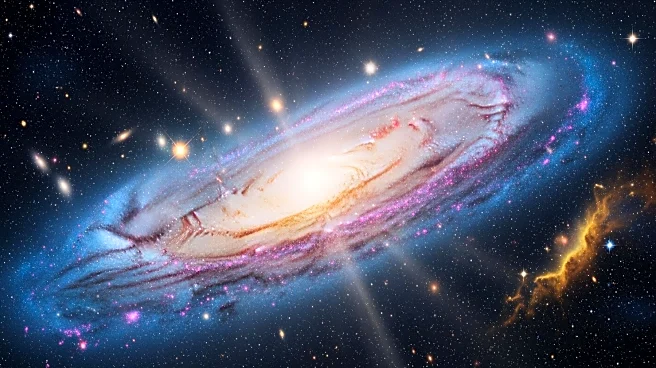
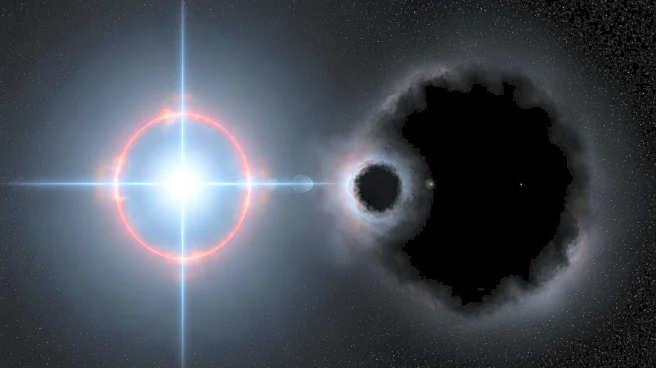
NASA has reported the mysterious disappearance of a massive star in the Fireworks Galaxy, NGC 6946, after it flared to over a million times the brightness of the Sun. The star, identified as N6946-BH1, was observed by the Hubble Space Telescope to have
dramatically increased in brightness in 2009 before vanishing by 2015. Scientists believe the star experienced a failed supernova, collapsing into a black hole without the typical explosive end. This event highlights the unique capabilities of the Hubble Space Telescope in capturing long-term cosmic changes.
Why It's Important?
The disappearance of N6946-BH1 provides valuable insights into the life cycle of massive stars and the formation of black holes. Unlike typical supernovae, this event suggests that some stars may end their lives quietly, challenging existing theories about stellar death. The findings underscore the importance of continuous observation and data collection in understanding cosmic phenomena. As NASA integrates data from Hubble with newer telescopes like the James Webb Space Telescope, such discoveries will refine scientific knowledge about gravity, black holes, and the universe's evolution.