
What's Happening?
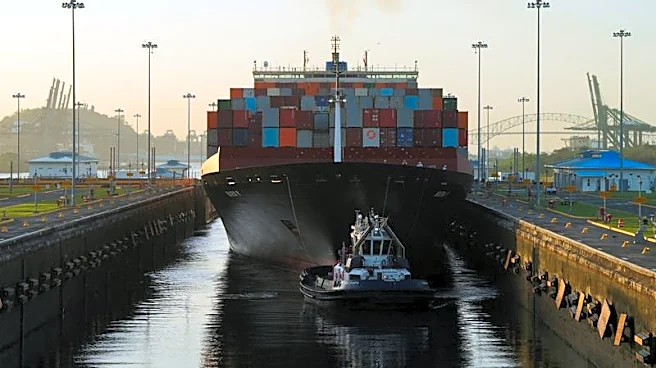
Panama President Jose Raul Mulino has defended his country's decision to take over port contracts previously held by Hong Kong's CK Hutchison, amidst a geopolitical dispute involving the United States
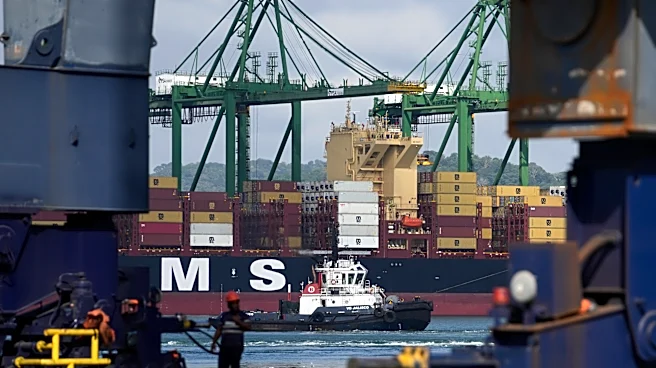
and China. The Panama Supreme Court's decision to revoke CK Hutchison's port concessions, which had been in place for nearly three decades, is seen as influenced by U.S. efforts to limit Chinese control over the strategic Panama Canal. In response, Panama has temporarily assigned the port operations to Maersk's APM Terminals and MSC's TIL Panama. CK Hutchison plans to challenge this move through international arbitration, claiming wrongful takeover. Despite the tensions, President Mulino emphasized maintaining a positive relationship with China, noting a recent diplomatic message from China acknowledging the arbitration process. However, he expressed concern over the increased detentions of Panama-flagged ships in China, which has drawn support from the U.S. and its allies for Panama's sovereignty.
Why It's Important?
The situation highlights the strategic importance of the Panama Canal, which handles 5% of global maritime trade, making it a focal point in the ongoing geopolitical tensions between the U.S. and China. The U.S. aims to curb Chinese influence in critical global trade routes, while China seeks to maintain its economic interests. The dispute over port control could have significant implications for international trade, potentially affecting shipping routes and logistics costs. The increased detentions of Panama-flagged ships in China could disrupt maritime operations and impact global supply chains. The U.S. and its allies' support for Panama underscores the broader geopolitical struggle for influence in key global trade corridors.
What's Next?
The next steps involve the international arbitration process initiated by CK Hutchison to contest the Panama government's takeover of the port contracts. The outcome of this arbitration could set a precedent for future disputes involving strategic trade routes. Additionally, the ongoing detentions of Panama-flagged ships in China may prompt further diplomatic engagements between Panama, China, and the U.S. to resolve the issue. The situation could escalate if not managed carefully, potentially leading to broader geopolitical ramifications. Stakeholders in the maritime industry will be closely monitoring developments, as any prolonged disruption could affect global trade dynamics.