

What's Happening?
Many U.S. National Parks provide accessible options for visitors to enjoy scenic views and natural beauty without requiring strenuous hiking. Parks like the Grand Canyon, Yellowstone, Acadia, Shenandoah, and Great Smoky Mountains offer a variety of experiences,
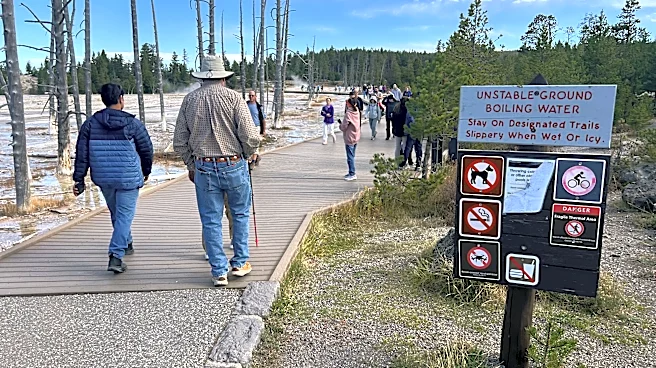
including scenic drives, overlooks, boardwalks, and short, easy trails. For instance, the Grand Canyon's South Rim features overlooks and paved sections of the Rim Trail, allowing visitors to take in the vast canyon views without descending into it. Yellowstone National Park is known for its boardwalks and scenic drives that lead to geysers, hot springs, and waterfalls. Acadia National Park offers ocean views and carriage roads suitable for walking or biking, while Shenandoah National Park's Skyline Drive provides numerous overlooks along the Blue Ridge Mountains. Great Smoky Mountains National Park highlights Cades Cove, an 11-mile loop road with historic buildings and wildlife viewing, and the Roaring Fork Motor Nature Trail for forested drives and short walks. These parks emphasize that a memorable visit doesn't always require challenging treks, catering to a wider range of physical abilities and preferences.
Why It's Important?
This focus on accessibility in National Parks is crucial for promoting inclusivity and ensuring that a broader demographic can experience and appreciate the natural wonders of the United States. By offering diverse options beyond strenuous hikes, parks can attract families with young children, elderly visitors, individuals with mobility limitations, and those simply seeking a more relaxed outdoor experience. This approach enhances public engagement with conservation efforts and fosters a deeper connection to nature across all segments of society. Economically, increased accessibility can lead to higher visitor numbers, boosting local tourism industries and supporting jobs in gateway communities. It also encourages repeat visits and positive word-of-mouth, further solidifying the parks' role as vital recreational and educational resources. Furthermore, by demonstrating that nature can be enjoyed in various ways, it challenges the perception that outdoor activities are exclusively for the highly fit or adventurous, making national parks more welcoming and relevant to everyone.
What's Next?
National Parks are expected to continue enhancing accessibility features, potentially through further development of paved trails, accessible viewpoints, and interpretive programs designed for diverse audiences. There may be an increased emphasis on digital resources, such as virtual tours and detailed accessibility guides, to help visitors plan their trips effectively. Park management will likely continue to monitor visitor feedback and adapt infrastructure to meet evolving needs, ensuring that new developments align with conservation goals while maximizing public access. Additionally, partnerships with accessibility advocacy groups and local communities could lead to innovative solutions for making park experiences even more inclusive. The ongoing effort to balance preservation with public enjoyment will guide future initiatives, aiming to create sustainable and welcoming environments for all visitors.
Beyond the Headlines
The emphasis on accessible national park experiences reflects a broader societal shift towards inclusive design and universal access in public spaces. This movement acknowledges that natural environments, like cultural institutions, should be available to everyone, regardless of physical ability or age. Beyond the practical benefits, it fosters a sense of shared ownership and responsibility for these national treasures. Ethically, it aligns with the principle that access to nature is a fundamental human right, contributing to mental and physical well-being. Culturally, it can reshape perceptions of outdoor recreation, moving away from an exclusive, elite activity towards a more communal and family-oriented pursuit. In the long term, this inclusive approach could lead to a more diverse and engaged constituency advocating for environmental protection and sustainable tourism, ensuring the longevity and relevance of national parks for future generations.