

What's Happening?
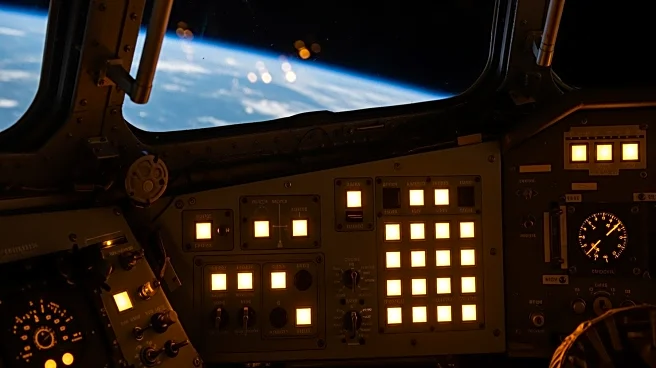
NASA is preparing for the Artemis II mission, which will be the first crewed mission to circle the moon in over 50 years. Scheduled for launch in April, the mission will involve a 10-day flight to test the new Orion spacecraft and its systems. The crew includes
Reid Wiseman, Victor Glover, Christina Koch, and Canadian astronaut Jeremy Hansen. The mission aims to validate the spacecraft's capabilities and the new Orion Crew Survival System spacesuits. The Artemis program, named after the twin sister of Apollo, seeks to build on the legacy of the Apollo missions by advancing human exploration of the moon.
Why It's Important?
The Artemis II mission marks a pivotal step in NASA's efforts to return humans to the moon and establish a sustainable presence there. This mission is crucial for testing the technologies and systems that will be used in future lunar and deep space exploration. The success of Artemis II could lead to further missions, including Artemis III, which aims to land astronauts on the moon's South Pole. The program has significant implications for scientific research, international collaboration, and the future of human space exploration. It also represents a substantial investment in space technology and infrastructure.
What's Next?
If successful, Artemis II will pave the way for Artemis III, which plans to land astronauts on the moon for scientific research. Following that, Artemis IV will focus on constructing the Gateway lunar space station, which will serve as a research hub and staging platform for future missions to Mars. The Artemis program's progress will be closely watched by international partners, commercial space companies, and scientific communities, as it could redefine the future of space exploration and collaboration.