




What's Happening?
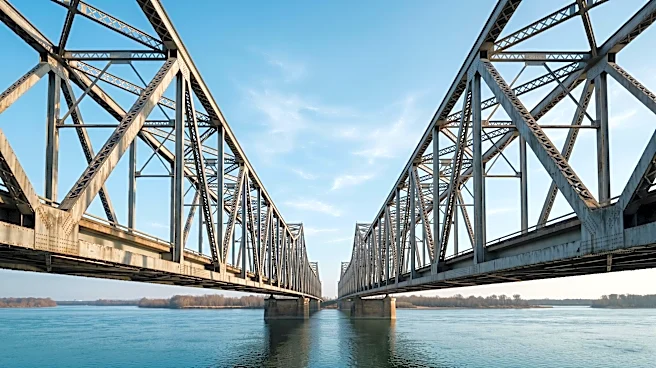
Local elected officials in Wilmington, New Hanover County, and Leland, North Carolina, are collectively urging federal assistance to reassess the navigation requirements for the replacement of the Cape Fear Memorial Bridge. The Wilmington City Council
and New Hanover County Commissioners have sent letters to Senators Thom Tillis and Ted Budd, and Congressman David Rouzer, requesting an updated assessment of the current and future navigational needs of the Cape Fear and Northeast Cape Fear rivers. This push comes after the U.S. Army Corps of Engineers and U.S. Coast Guard determined in May 2025 that a replacement bridge would require at least 135 feet of vertical clearance, leading the North Carolina Department of Transportation (NCDOT) to remove a 100-foot alternative from consideration. Local officials argue that this 135-foot requirement is based on a 30-year-old federal analysis that may no longer reflect the actual river traffic or economic activity in the region. They highlight that the current vessels causing the existing bridge to open are predominantly recreational sailboats, and industrial uses north of the bridge have diminished.
Why It's Important?
The debate over the Cape Fear Memorial Bridge's height has significant implications for the region's infrastructure, economy, and environment. A 135-foot fixed bridge, as currently mandated, would necessitate longer approaches, impacting more parcels, wetlands, floodplains, and noise receptors in Wilmington compared to a 100-foot alternative. The NCDOT's Environmental Assessment indicates that a 135-foot bridge would affect 63 parcels and 20.8 acres of floodplain, versus 22 parcels and 1.4 acres for a movable 65-foot bridge. This increased footprint could displace businesses, affect historic resources, and alter the physical fabric of Wilmington. Reassessing the navigation requirements could lead to a more cost-effective and less disruptive bridge design, potentially saving taxpayer money and preserving local communities. The outcome will set a precedent for how federal navigation standards are applied to regional infrastructure projects, especially when local conditions and economic realities have evolved significantly since the original assessments.
What's Next?
The public comment period on the NCDOT's Environmental Assessment for the Cape Fear Memorial Bridge replacement remains open until October 15, 2026. During this time, citizens can submit comments regarding the bridge's height, navigation requirements, environmental impacts, and alternative designs. Local officials are encouraging constituents to contact their congressional delegation—Senators Budd and Tillis, and Congressman Rouzer—to support an updated federal assessment of the river's navigational needs. The Leland Town Council is also preparing to consider its own resolution and congressional letter, further amplifying the regional call for re-evaluation. The collective action from local governments and public input will likely pressure federal agencies to review the decades-old navigation analysis. The decision on whether to proceed with the 135-foot clearance or to conduct a new assessment will determine the final design and impact of the bridge, shaping the region for generations.
Beyond the Headlines
The controversy surrounding the Cape Fear Memorial Bridge highlights a broader tension between long-standing federal regulations and evolving local needs. The reliance on a 30-year-old navigation analysis, despite significant changes in river usage and economic activity, raises questions about the adaptability and responsiveness of federal agencies to current realities. This situation underscores the importance of periodic re-evaluation of infrastructure standards to ensure they align with contemporary environmental, social, and economic contexts. The case also touches upon the ethical considerations of urban development, particularly how large-scale infrastructure projects can disproportionately affect local communities and natural habitats. The unified stance of local elected officials, transcending individual political agendas, demonstrates the power of regional consensus in advocating for tailored solutions that prioritize community well-being and sustainable development over potentially outdated mandates. The outcome could influence how similar infrastructure projects are planned and executed across the U.S., emphasizing a more dynamic and locally informed approach to federal guidelines.