







What's Happening?
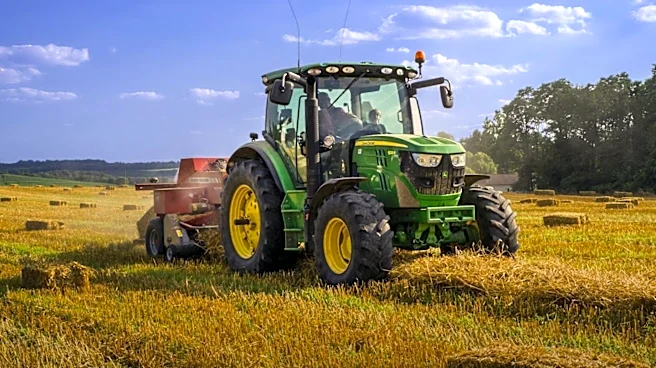
The John Deere Foundation has announced an $18.5 million commitment to its 'Farm-to-Plate' strategy, aimed at addressing food insecurity and strengthening connections between farmers and food banks across the United States. A significant portion of this
funding, $13 million, is specifically allocated to support food banks and farmers in Iowa. The initiative includes a $17 million grant to Feeding America over three years, which will expand access to nutritious food, bolster food banks nationwide, and foster direct partnerships between farmers and food banks. Additionally, $1.5 million will be invested in The Farmlink Project to recover surplus food from farms and redirect it to communities in need. This strategy seeks to enhance food sourcing capacity, strengthen distribution networks, and mobilize John Deere employees for volunteer efforts, with projections of 22,000 employees packing 1.8 million meals between 2026 and 2029. The program in Iowa is expected to increase the number of participating farmers from approximately 20 to 120 across three food banks: Food Bank of Iowa, Riverbend Food Bank, and Northeast Iowa Food Bank.
Why It's Important?
This substantial investment by the John Deere Foundation is crucial for several reasons. It directly addresses the growing issue of food insecurity in the U.S., particularly in states like Iowa where 1 in 8 residents face hunger. By fostering direct relationships between farmers and food banks, the initiative creates new market opportunities for local producers, helping to sustain farming operations and ensure that nutritious, locally grown food reaches those who need it most. This model also reduces food waste by rescuing surplus produce that might otherwise go unharvested or unsold. The partnership with Feeding America and The Farmlink Project strengthens the national food distribution infrastructure, making it more efficient and resilient. For farmers, it provides a stable outlet for their produce, potentially mitigating financial risks and encouraging sustainable practices. For communities, it means increased access to fresh, healthy food, which can improve public health outcomes and reduce the burden on social services.
What's Next?
Over the next three years, the John Deere Foundation's 'Farm-to-Plate' strategy will be implemented through its partnerships with Feeding America and The Farmlink Project. In Iowa, the three targeted food banks—Food Bank of Iowa, Riverbend Food Bank, and Northeast Iowa Food Bank—will work to expand their direct farmer partnerships, aiming to engage around 100 additional producers. This expansion will involve increasing local food procurement, with Food Bank of Iowa planning to add 10-12 new producers annually. The Farmlink Project anticipates delivering 6.4 million pounds of rescued fresh produce, providing 5.3 million meals, and supporting 30 to 60 farming operations across multiple states. John Deere employees will also participate in annual volunteer initiatives, packing meals and supporting local hunger-relief efforts. The success of these initial phases will likely inform future expansions and adaptations of the 'Farm-to-Plate' strategy, potentially leading to broader engagement with farmers and food banks nationwide.
Beyond the Headlines
The John Deere Foundation's initiative extends beyond immediate hunger relief by aiming to create a more robust and sustainable food system. By investing in direct farmer-to-food bank relationships, it challenges traditional food supply chains and promotes a localized approach to food distribution. This model can empower local economies, reduce the carbon footprint associated with long-distance food transportation, and foster a greater sense of community resilience. Furthermore, the focus on rescuing surplus food highlights the broader issue of food waste in the agricultural sector, encouraging more efficient resource utilization. The involvement of John Deere employees through volunteerism also underscores a growing trend of corporate social responsibility, where companies leverage their resources and workforce to address societal challenges. This long-term commitment could serve as a blueprint for other corporations looking to make a meaningful impact on food security and agricultural sustainability.