

What's Happening?
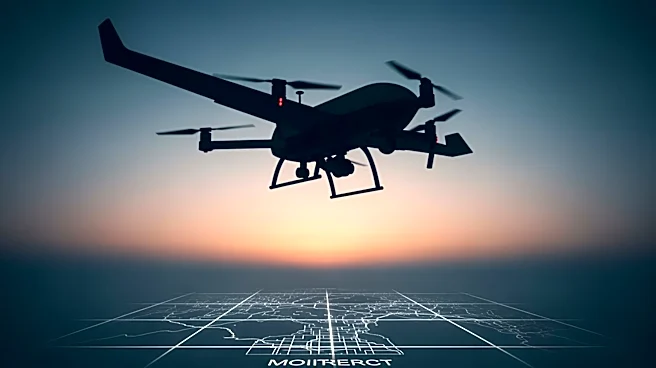
The U.S. Army is deploying low-cost interceptor drones, known as Merops, to counter Iranian-made Shahed drones. These drones were initially tested in Ukraine and are part of a strategy to address the economic imbalance in air defense, which has traditionally
favored adversaries using inexpensive, disposable technology. Army Secretary Dan Driscoll announced during a budget hearing that the Army has already begun deploying these systems and is rapidly increasing production. The Merops drones, developed by U.S. defense firm Perennial Autonomy, are designed to destroy hostile drones in flight and are equipped with a two-kilogram fragmentation warhead. They can operate in contested environments and resist GPS and radio-frequency jamming. The system was first used by Ukrainian forces in 2024 and has since been adopted by NATO allies like Poland and Romania.
Why It's Important?
The deployment of Merops drones represents a significant shift in air defense strategy, focusing on cost-effectiveness and rapid deployment. By using drones that are cheaper than the Shahed drones they are designed to intercept, the U.S. Army aims to gain a financial advantage in drone warfare. This approach could reshape military procurement and defense strategies, emphasizing the need for adaptable and economically viable solutions. The success of these drones could influence future military engagements and defense policies, potentially leading to broader adoption of similar technologies by other nations. The ability to counter massed drone attacks effectively and affordably is crucial for maintaining air superiority and protecting military assets.
What's Next?
The U.S. Army plans to continue scaling up the production of Merops drones, potentially reducing their cost further. This could lead to more widespread deployment across various military units and possibly influence allied nations to adopt similar systems. The ongoing development and refinement of these drones will likely focus on enhancing their capabilities and ensuring they remain effective against evolving threats. Additionally, the success of this program may prompt further investment in similar technologies, driving innovation in the defense sector.