





What's Happening?
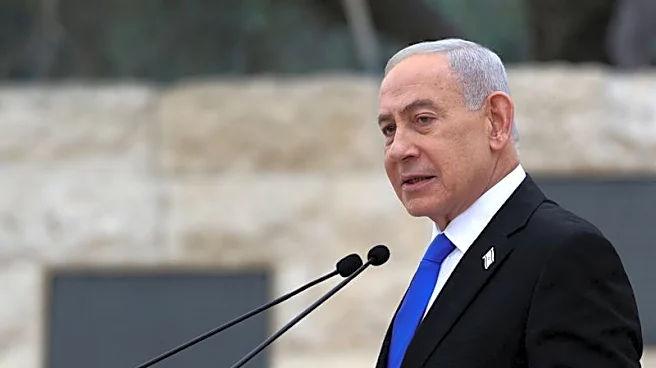
Israeli Prime Minister Benjamin Netanyahu has declared that the conflict with Iran remains unresolved, emphasizing the ongoing efforts by the U.S. and Israel to curb Tehran's nuclear ambitions. In a taped interview for CBS's '60 Minutes,' Netanyahu highlighted
the presence of enriched uranium in Iran that needs to be removed, as well as the necessity to dismantle enrichment sites. He also pointed out Iran's support for proxies and their continued interest in producing ballistic missiles. The interview underscores the persistent challenges faced by both nations in addressing Iran's nuclear capabilities. President Trump has rejected the latest offer from Iran, further complicating diplomatic efforts.
Why It's Important?
The ongoing tensions between Iran, Israel, and the U.S. have significant implications for international security and Middle Eastern stability. The unresolved nuclear issue poses a potential threat to regional peace, with the risk of escalating into broader conflict. The U.S. and Israel's stance on Iran's nuclear program reflects their commitment to preventing nuclear proliferation, which is a critical concern for global security. The rejection of Iran's offer by President Trump indicates a hardline approach that could influence future diplomatic negotiations and impact U.S. foreign policy in the region.
What's Next?
The next steps involve continued diplomatic and strategic efforts by the U.S. and Israel to address the nuclear threat posed by Iran. This may include increased sanctions, diplomatic negotiations, or potential military actions to ensure compliance with international nuclear agreements. The international community will be closely monitoring the situation, as any escalation could have widespread consequences. Stakeholders, including other Middle Eastern countries and global powers, may seek to mediate or influence the outcome to prevent further instability.