




What's Happening?
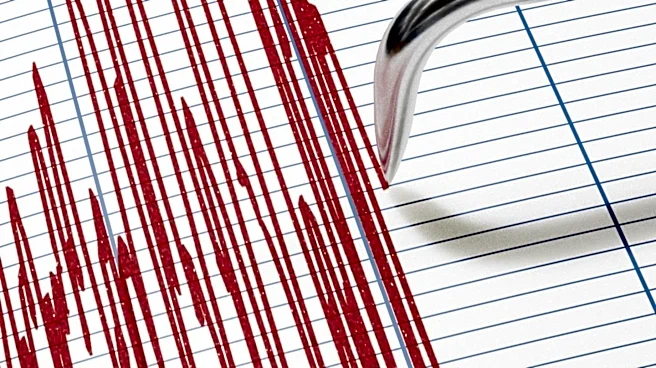
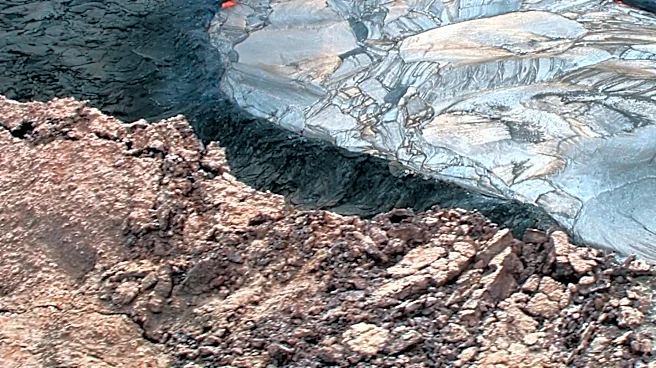
The Kīlauea Volcano in Hawaiʻi is experiencing increased earthquake activity in its Southwest Rift Zone, with a swarm of 18 earthquakes recorded recently. The ongoing eruption at the summit remains paused due to continued deflation, delaying the start
of the next lava fountaining episode. The earthquakes, ranging from shallow to depths of about 3.7 miles, are concentrated in a small area past the Koʻae fault zone. The largest recorded earthquake had a magnitude of 2.3. Scientists are monitoring the situation closely, with inflation models suggesting the next episode could start between August 12th and 15th.
Why It's Important?
The increased seismic activity at Kīlauea highlights the dynamic nature of volcanic regions and the potential risks they pose to nearby communities. Understanding these patterns is crucial for disaster preparedness and risk mitigation. The situation underscores the importance of continuous monitoring and research to predict volcanic behavior and protect residents and infrastructure. The delay in the eruption's next phase also affects tourism and local businesses that rely on the volcano's activity as an attraction.
What's Next?
Scientists will continue to monitor the seismic activity and deflation patterns to provide accurate forecasts for the next eruption phase. Local authorities may issue advisories or updates to ensure public safety. The situation could prompt discussions on improving infrastructure and emergency response plans in volcanic regions. Additionally, the scientific community may use this data to enhance predictive models for volcanic activity.