






What's Happening?
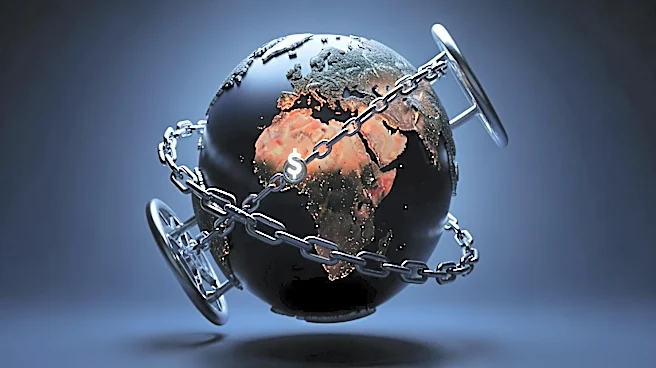
President Trump has initiated a comprehensive economic strategy aimed at pressuring Iran through a combination of a naval blockade and financial sanctions. This approach is part of an ongoing economic and psychological war of attrition between the United
States and Iran, with each side attempting to force the other into diplomatic negotiations. The U.S. strategy includes a naval blockade to prevent Iran from exporting oil and a freeze on cryptocurrency accounts linked to the Iranian Revolutionary Guards. This economic warfare is designed to weaken Iran's regime without directly impacting its civilian population. Meanwhile, Israel is observing the situation closely, preparing for potential escalations in the region.
Why It's Important?
The economic measures taken by the U.S. are significant as they aim to cripple Iran's economy, potentially leading to a shift in the geopolitical landscape of the Middle East. By targeting Iran's financial resources, the U.S. hopes to force Iran into negotiations that could lead to a reduction in its nuclear capabilities and military influence in the region. This strategy also impacts global oil markets, as the blockade could lead to increased oil prices, affecting economies worldwide. The outcome of this economic confrontation could influence U.S. foreign policy and its relations with allies in the Middle East, particularly Israel and Saudi Arabia.
What's Next?
The situation remains tense as both the U.S. and Iran continue their economic standoff. The U.S. is likely to maintain its pressure on Iran, hoping to bring about a diplomatic resolution. However, if Iran continues to resist, the U.S. may consider further economic or military actions. The international community, including countries like China and Russia, may also play a role in mediating or influencing the outcome. The potential for renewed military conflict in the region remains, with Israel and other regional players preparing for possible escalations.