






What's Happening?
The U.S. Senate is preparing for a test vote on the Ratepayer Protection Act, legislation aimed at tackling rising electricity prices. Senate Majority Leader John Thune, R-S.D., indicated that this bill is a priority for the upcoming session before the November
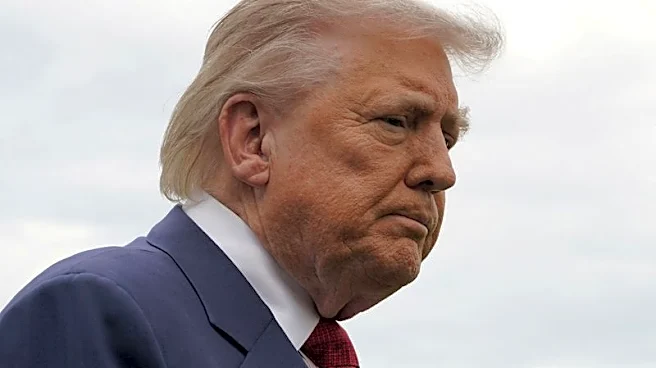
midterm elections. The proposed act would mandate state regulators to consider adopting standards that ensure large data centers bear the costs of necessary electric grid upgrades. The House of Representatives previously passed this bill with a significant majority of 417-3. However, efforts by Sen. Jon Husted, R-Ohio, to fast-track the bill for President Trump's signature were blocked by Democrats. Sen. Husted, who faces a challenging re-election bid, argues that the bill has broad support from the President, House Democrats and Republicans, consumers, and the business community. Conversely, Senate Minority Leader Charles E. Schumer, D-N.Y., has criticized Husted's bill as a 'fraud' due to its voluntary nature, advocating for a stronger, mandatory alternative.
Why It's Important?
The Ratepayer Protection Act highlights a growing national concern over electricity costs, particularly as the demand from artificial intelligence (AI) data centers strains existing power grids. The debate surrounding this bill underscores the tension between technological advancement and consumer affordability. If passed, the legislation could shift the financial burden of grid upgrades from general ratepayers to the large energy consumers, such as data centers, potentially mitigating the impact of rising electricity bills on households and smaller businesses. The political maneuvering around the bill also reflects its significance as an 'affordability issue' ahead of the midterm elections, with both parties seeking to demonstrate their commitment to addressing consumer costs. The outcome will influence how future energy infrastructure investments are funded and could set a precedent for how states regulate the energy consumption of rapidly expanding industries like AI.
What's Next?
The U.S. Senate is expected to hold a test vote on the Ratepayer Protection Act in the coming week. The outcome of this vote will determine the bill's immediate future and whether it can advance for President Trump's signature. Given the current political climate and the differing views between Senate Democrats and Republicans regarding the bill's effectiveness and scope, further negotiations or amendments may be necessary. If the bill passes, state regulators would then be tasked with developing and implementing standards to ensure data centers contribute to grid upgrade costs. The ongoing debate also suggests that electricity costs and the energy demands of AI data centers will remain a prominent issue in political campaigns, particularly in states where data centers are prevalent or proposed. The legislative process will likely continue to be influenced by the upcoming midterm elections, as lawmakers aim to address voter concerns about affordability.
Beyond the Headlines
The discussion around the Ratepayer Protection Act extends beyond immediate electricity costs, touching upon broader implications for energy policy, technological development, and economic equity. The rapid expansion of AI data centers, while driving innovation, presents a significant challenge to existing energy infrastructure and raises questions about sustainable growth. The legislative effort to make these large consumers pay for grid upgrades reflects a growing recognition that the societal benefits of new technologies must be balanced with their environmental and economic impacts. This could lead to a re-evaluation of incentives and regulations for energy-intensive industries, potentially fostering more energy-efficient practices or encouraging the development of dedicated renewable energy sources for such facilities. Furthermore, the political discourse surrounding 'affordability' and 'corporate interests' highlights a deeper societal conversation about who benefits from technological progress and who bears its costs, potentially influencing future policy decisions on infrastructure, taxation, and environmental protection.