


What's Happening?
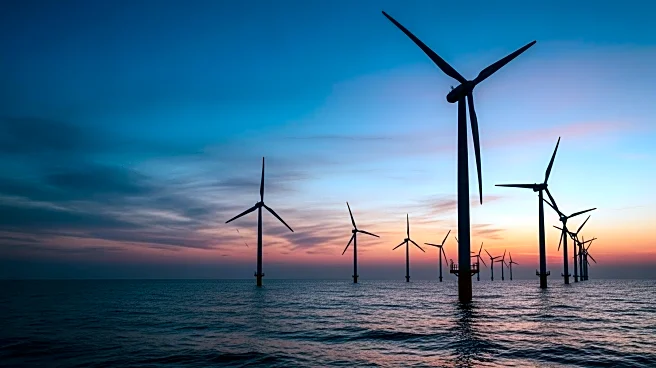
Nine European governments, including Germany, Britain, and Denmark, are set to reinforce their commitment to expanding offshore wind power projects. This decision comes despite criticism from U.S. President Trump, who has openly disparaged wind turbines,
claiming they are economically disadvantageous. At a summit in Hamburg, these governments will pledge to accelerate offshore wind power expansion, aiming for a total capacity of 300 gigawatts by 2050. The initiative includes large-scale, cross-border projects, with up to 100 gigawatts expected to be achieved through joint efforts among countries like Belgium, France, Ireland, Luxembourg, the Netherlands, and Norway. The expansion is intended to ensure a stable, secure, and affordable energy supply, enhance local value creation, and generate jobs.
Why It's Important?
The commitment to offshore wind energy by European governments highlights a significant shift towards renewable energy sources, which could have broad implications for global energy markets. This move is particularly relevant as it contrasts with President Trump's stance on renewable energy, potentially influencing international energy policies and economic strategies. The expansion of wind energy is expected to bolster energy security, reduce carbon emissions, and create economic opportunities through job creation and industrial competitiveness. It also underscores the growing strategic autonomy of European countries in energy production, which could impact global energy dynamics and trade relations.
What's Next?
The European governments' commitment will likely lead to increased investment in wind energy infrastructure and technology. This could involve enhanced financing mechanisms, such as EU budget guarantees and subsidy frameworks, to support the development of wind projects. The initiative may also prompt other regions to reconsider their energy strategies, potentially leading to a broader global shift towards renewable energy. Additionally, the success of these projects could influence future international climate agreements and energy policies, as countries seek to balance economic growth with environmental sustainability.