



What's Happening?
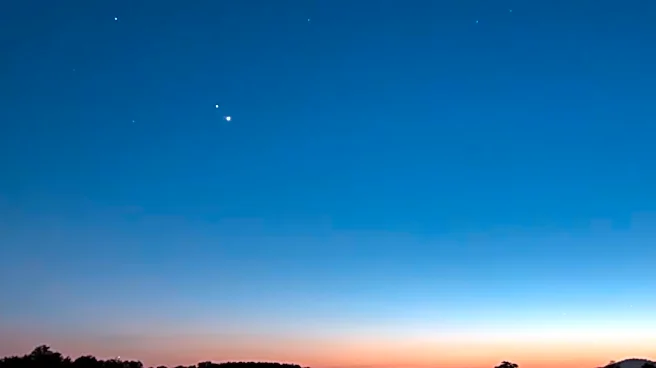
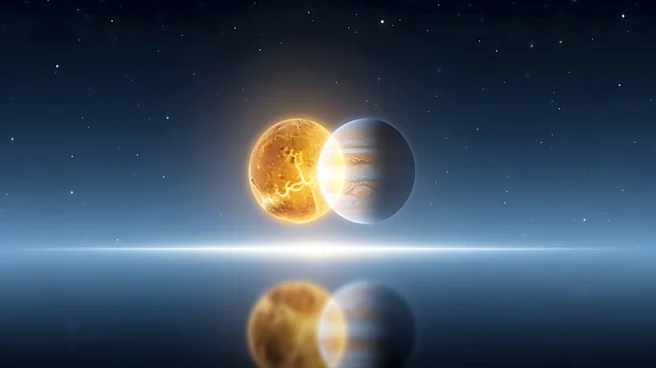
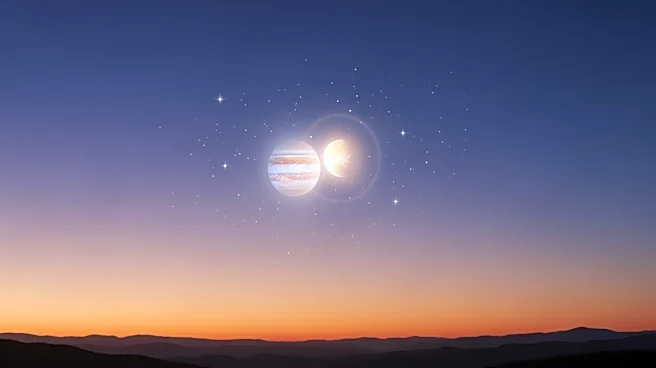
On June 9, 2026, Jupiter and Venus will make a close approach in the evening sky, providing a stunning visual event for stargazers in the United States. Venus will appear less than 20 degrees above the horizon at sunset, with Jupiter positioned to its
lower left. Mercury will also be visible, though more challenging to spot, shining approximately 10 degrees below and to the lower right of the pair. The conjunction will see Venus and Jupiter separated by less than 2 degrees, close enough to be viewed together through binoculars. This celestial event will allow observers to potentially see Jupiter's four Galilean moons. Following the conjunction, Venus will continue its path toward the constellation Cancer, shining with the Beehive Cluster on June 20.
Why It's Important?
This astronomical event is significant as it offers a rare opportunity for skywatchers to observe two of the brightest planets in close proximity. Such events can inspire interest in astronomy and provide educational opportunities for both amateur and professional astronomers. The visibility of Jupiter's moons adds an extra layer of interest, showcasing the dynamic nature of our solar system. For the general public, this event is a chance to engage with the night sky and appreciate the beauty and complexity of celestial movements.
What's Next?
As Venus continues its journey across the night sky, it will rise above Jupiter in the following nights, moving towards the constellation Cancer. Jupiter, on the other hand, will become increasingly difficult to spot as it descends lower on the horizon each night. By early July, Jupiter will be challenging to see, disappearing into the glow of the setting sun until it reappears in the eastern morning sky in mid-August. This progression offers ongoing opportunities for skywatchers to track the movements of these planets.