
What's Happening?
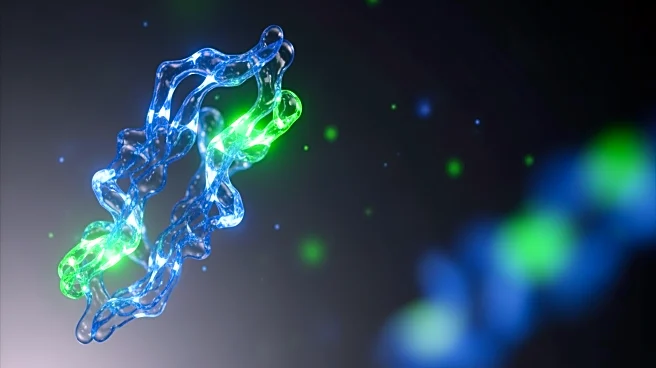
Researchers from The University of Osaka have developed a new fluorescent marker called Gachapin, designed to monitor cell communication in real-time. Traditional markers like green fluorescent protein
(GFP) are limited in their ability to detect dynamic cell interactions due to their irreversible nature and delayed signal emission. Gachapin, however, features a two-part system where the fluorescent marker remains inactive until it is in close proximity to its binding partner, allowing for rapid activation and deactivation. This innovation enables the visualization of temporary and reversible cell contacts, particularly useful in observing neuronal processes. Additionally, a single-component version, Gachapin-C, has been developed to detect interactions within the same neuron. These advancements are expected to significantly enhance the understanding of cellular interactions and could have implications for research into neural circuits and brain disorders.
Why It's Important?
The development of Gachapin and Gachapin-C represents a significant advancement in the field of cellular biology and neuroscience. By allowing researchers to observe real-time interactions between cells, these markers provide a more detailed understanding of cellular communication and connectivity. This could lead to breakthroughs in understanding complex neural networks and the role of dynamic interactions in brain disorders. The ability to monitor these interactions in real-time could also facilitate the development of new treatments for neurological conditions, potentially improving outcomes for patients. Furthermore, the technology could be applied to other areas of biological research, enhancing the study of various cellular processes and interactions.