






What's Happening?
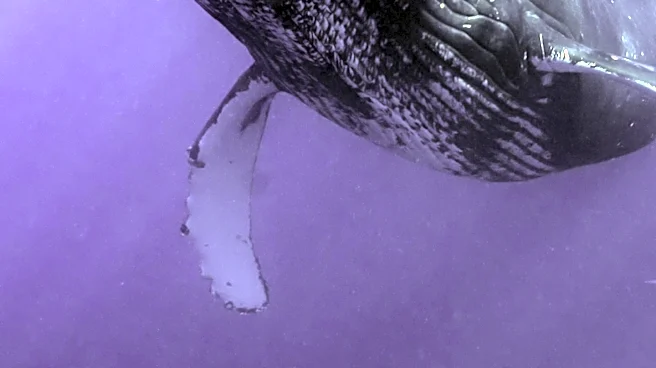
Scientists have identified a previously unrecorded North Atlantic right whale calf, a species critically endangered with only about 380 individuals remaining globally. The 15,000-pound baby whale was photographed off Anticosti Island in Quebec in September
by researchers from Mingan Island Cetacean Study. Experts at the New England Aquarium in Boston confirmed this week that the calf was born months ago, likely off the southeastern U.S., but went undocumented during winter surveys. This discovery increases the total number of calves from the most recent birthing season to 24, marking the most productive year since 2009 and the fourth-highest count on record. The calf was observed with its 38-year-old mother, known as Silt.
Why It's Important?
This discovery is a significant boost for the conservation efforts of the North Atlantic right whale, one of the world's rarest marine mammals. With only about 70 reproductive-age females left, each successful birth is crucial for the species' survival. The addition of an unrecorded calf to the count for the birthing season indicates a more productive year than previously thought, offering a glimmer of hope amidst declining population trends since 2010. This finding underscores the challenges in monitoring these elusive creatures across vast ocean expanses and highlights the dedication of scientific organizations like the New England Aquarium and Mingan Island Cetacean Study in tracking and protecting endangered marine life. The increased calf count provides valuable data for understanding reproductive success and informing future conservation strategies.
What's Next?
Following this discovery, scientists will continue to monitor the newly identified calf and its mother, Silt, to track their health, movements, and integration into the broader right whale population. Researchers will likely intensify efforts to refine survey methods and technologies to ensure more comprehensive documentation of births in future calving seasons. The increased number of calves will inform updated population models, which are critical for guiding conservation policies and regulations aimed at protecting the species from threats such as ship strikes and fishing gear entanglement. This positive development may also encourage increased funding and support for right whale research and protection initiatives, both from governmental bodies and private organizations.
Beyond the Headlines
The unexpected discovery of this right whale calf highlights the inherent difficulties and occasional pleasant surprises in wildlife conservation, particularly for highly migratory and endangered species. It underscores the vastness and mystery of the ocean, where even large animals can go unnoticed for extended periods. This event could also serve as a powerful narrative in public awareness campaigns, emphasizing that conservation efforts, while challenging, can yield positive results and that every individual animal counts. Ethically, it reinforces the responsibility of humanity to protect biodiversity and the natural world, especially for species on the brink of extinction. The story also subtly points to the continuous evolution of scientific methods, as researchers adapt and improve their techniques to better understand and safeguard vulnerable populations.