

What's Happening?
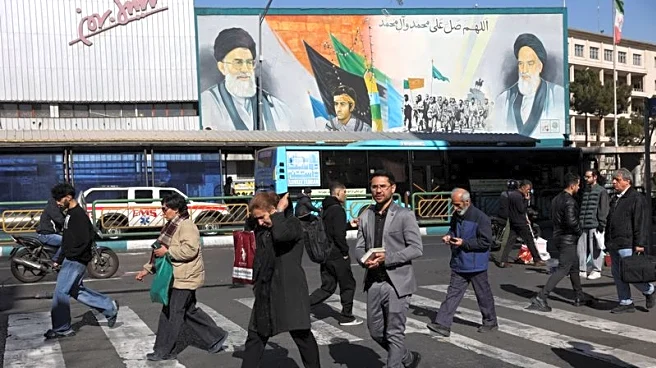
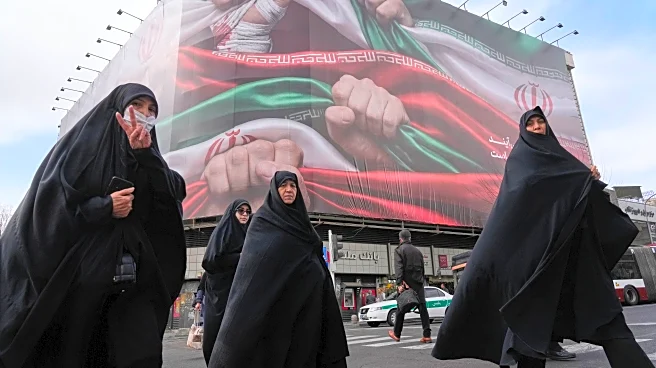
An official from Iran's Interior Ministry has defected and joined the ongoing protests, calling on U.S. President Trump to take action against the Iranian regime. The defector, whose identity is protected, has accused the regime of using live ammunition
against protesters and described the situation as a de facto martial law in several provinces. The protests, which began as an economic grievance, have evolved into a widespread uprising against the regime. The defector's appeal to President Trump highlights the growing expectations among protesters for international intervention as the violence continues.
Why It's Important?
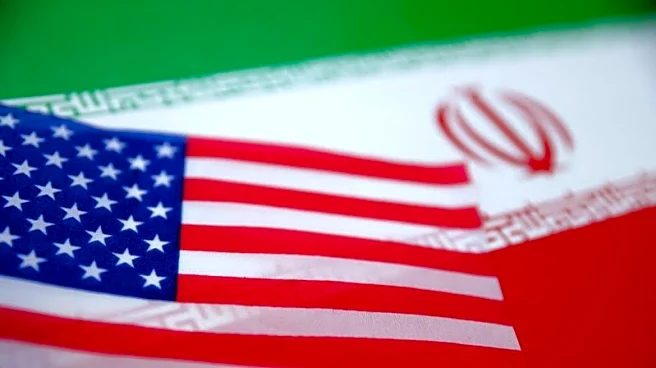
The defection of an Iranian official and the call for U.S. intervention underscore the severity of the crisis in Iran. The protests represent a significant challenge to the Iranian regime, which is facing both internal dissent and external pressure. The situation has implications for U.S.-Iran relations, as President Trump's response could influence the dynamics of the protests and the regime's stability. The defector's appeal also reflects the broader geopolitical tensions in the region, with potential consequences for U.S. foreign policy and regional security.
What's Next?
The international community, particularly the U.S., faces a critical decision on how to respond to the situation in Iran. President Trump's previous threats of military intervention and his recent statements suggest a potential for increased U.S. involvement. However, any action must consider the complex geopolitical landscape and the potential for escalation. The Iranian regime's response to the protests and international pressure will be pivotal in determining the future trajectory of the crisis. The situation remains fluid, with significant implications for regional stability and international relations.