
What's Happening?
The California governor's race is witnessing unprecedented financial involvement from billionaires, corporations, and special interest groups, making it the most expensive primary campaign in the state's
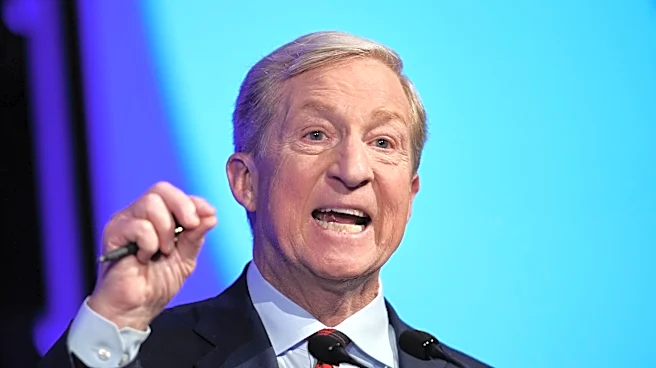
history. A significant portion of the spending is directed against billionaire Tom Steyer, who has pledged to challenge Pacific Gas & Electric's monopoly and push for more accurate property tax assessments on business properties. A political spending committee, California Is Not For Sale, funded by entities like the California Chamber of Commerce and PG&E, has invested $32 million in ads opposing Steyer. Meanwhile, other groups are supporting Xavier Becerra, with contributions from companies like Chevron and McDonald's. Republican frontrunner Steve Hilton, endorsed by President Trump, has garnered the most individual donors, while Democrat Katie Porter has a significant national donor base.
Why It's Important?
The massive financial influx into the California governor's race underscores the influence of special interests in shaping political outcomes. The stakes are high, as the elected governor will have significant power over state policies, including those affecting the environment, taxation, and business regulations. The financial backing of candidates by major corporations and unions highlights the potential for policy decisions that could favor these entities. For instance, Steyer's opposition to PG&E's monopoly and his tax reform proposals could disrupt the commercial real estate market and impact utility costs. The race also reflects broader national political dynamics, with endorsements from figures like President Trump potentially swaying voter opinions and donations.
What's Next?
As the primary election approaches, candidates will continue to leverage their financial resources to sway voters through advertising and public appearances. The outcome of the race could lead to significant policy shifts in California, particularly in areas like environmental regulation and taxation. Stakeholders, including businesses, unions, and political groups, will likely intensify their efforts to influence the election's outcome. The candidates' ability to maintain or increase their financial support will be crucial in the final weeks leading up to the election.