



What's Happening?
Russia’s Foreign Intelligence Service (SVR) has accused Ukrainian military intelligence of training drone operators, including those for kamikaze drones, in Mali. SVR Deputy Director Mikhail Maksimovich stated on November 6 that representatives of the
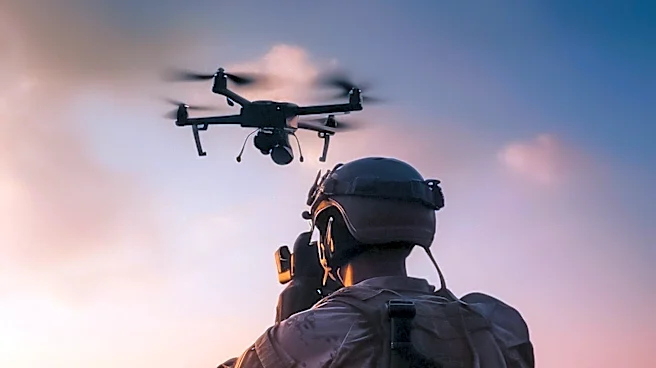
Main Intelligence Directorate of the Ukrainian Defense Ministry are organizing these training courses. This accusation follows a September 12 investigation by CNN, which reported that approximately 15 Ukrainian specialists were deployed to assist the Azawad Liberation Front (FLA), a predominantly Tuareg separatist movement fighting Malian government forces and their Russian allies. According to CNN, these Ukrainian specialists are providing drone training, operational planning, and remote assistance during missions. A Ukrainian military intelligence source also indicated that troops from Chad, Niger, and Burkina Faso have traveled to Mali for drone warfare training from Ukrainian personnel. One Ukrainian operator described coordinating militant drone missions remotely via the internet and radio.
Why It's Important?
This development is significant as it suggests a potential expansion of the conflict in Ukraine into African territories, specifically Mali, and raises questions about international involvement in regional conflicts. The alleged Ukrainian support for the FLA, a group that has cooperated militarily with Jama’at Nusrat al-Islam wal-Muslimin (JNIM), an al-Qaida-affiliated terrorist group, could have serious implications. If confirmed, this could indirectly benefit a designated terrorist organization with Ukrainian training and operational expertise, potentially destabilizing the region further and complicating counter-terrorism efforts. The involvement of external powers in Mali's internal conflicts could exacerbate existing tensions and prolong the fighting, impacting regional security and humanitarian situations. The accusations also highlight the growing use of drone technology in modern warfare and the potential for its proliferation to various non-state actors.
What's Next?
The accusations from Russia's SVR and the reports from CNN and Deutsche Welle are likely to prompt further scrutiny and potentially lead to diplomatic responses from various international actors. The Malian government and its Russian allies will likely continue to highlight these alleged foreign interventions as justification for their military operations against separatist groups. Conversely, Ukraine may face pressure to address these allegations, potentially impacting its international standing and relationships. The ongoing conflict in Mali, with the reported involvement of Ukrainian personnel and the FLA's setbacks despite this support, suggests continued instability in the region. Future developments will likely involve further intelligence reports, diplomatic exchanges, and continued military engagements on the ground in Mali, with the role of drone technology becoming increasingly central.
Beyond the Headlines
The alleged involvement of Ukrainian military intelligence in training drone operators for a separatist movement in Mali, particularly one with ties to an al-Qaida-affiliated group, raises profound ethical and legal questions regarding the conduct of international relations and proxy conflicts. This situation could set a dangerous precedent for how nations engage in conflicts beyond their borders, potentially blurring the lines between state-sponsored support and indirect aid to terrorist organizations. It also underscores the complex and interconnected nature of global security, where conflicts in one region can have ripple effects across continents. The proliferation of advanced military technology, such as drones, to various actors, including those with questionable affiliations, poses a long-term challenge to international stability and arms control efforts, demanding a re-evaluation of existing frameworks for preventing such transfers.