



What's Happening?
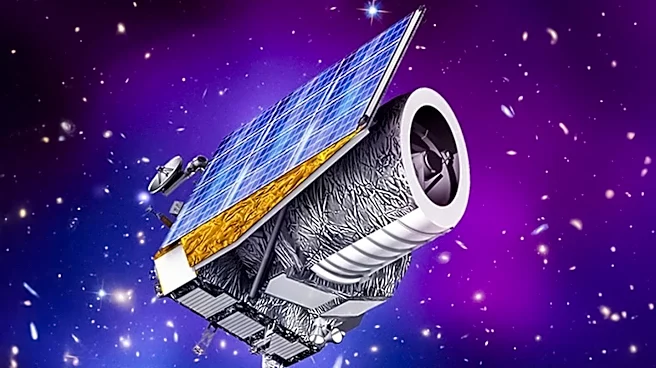
The Defense Logistics Agency Energy (DLA Energy) successfully delivered 3,000 pounds of high-purity hydrazine to Kennedy Space Center for NASA's Nancy Grace Roman Space Telescope. This critical propellant is essential for the telescope's long-term operation,
enabling precise pointing, orbit adjustments, and stabilization during its mission to Lagrange Point 2, approximately 1 million miles from Earth. Hydrazine is a monopropellant that decomposes upon contact with a catalyst, providing thrust without needing an external oxygen source. DLA Energy, a major command within the Defense Logistics Agency, manages specialized energy supply chains for the Department of War and supports civilian agencies like NASA with mission-critical propellants. The transportation of this toxic and volatile chemical adhered to strict federal safety protocols, including specialized Department of Transportation-certified cylinders, dual drivers, exclusive use transport, and continuous satellite monitoring.
Why It's Important?
This delivery highlights the critical role of specialized logistics and precise propellant management in enabling advanced space exploration and national defense missions. The Roman Space Telescope, a multibillion-dollar observatory, represents a significant national science investment aimed at unlocking secrets of dark energy, discovering exoplanets, and mapping the cosmos. The reliability and purity of its fuel are paramount, as even microscopic impurities could jeopardize the mission. DLA Energy's capability to source, certify, and deliver such specialized propellants ensures that crucial space missions are not delayed by supply chain issues, reinforcing American leadership in space. This interagency coordination between DLA Energy and NASA is vital for the success of complex scientific endeavors that require years of operation without refueling, demonstrating robust support for both scientific advancement and national security objectives.
What's Next?
With the successful delivery and loading of the hydrazine propellant, the Roman Space Telescope is now en route to its operational station. The telescope will soon unfurl its instruments to begin its scientific survey of the universe, a mission expected to last for years. DLA Energy will continue its role as the integrated manager for hypergolic products across the Department of War, supporting future defense, scientific, and commercial space missions. This includes actively forecasting requirements to prevent industrial bottlenecks and maintaining product readiness for highly specialized propellants. The agency's ongoing commitment to rigorous quality control and precise delivery will remain crucial for upcoming space launches and long-duration missions by NASA, the U.S. Space Force, and commercial partners.
Beyond the Headlines
The meticulous process of fueling deep-space missions like the Roman Space Telescope underscores the hidden complexities and interdependencies within the U.S. space program. While public attention often focuses on rocket launches, the behind-the-scenes logistics, chemical engineering, and safety protocols are equally vital. The use of high-purity hydrazine, a highly specialized and hazardous substance, highlights the extreme precision and risk management required for space operations. This capability also reflects the broader industrial base readiness of the U.S., ensuring that unique and difficult-to-produce materials are available when needed for critical national endeavors. The collaboration between military logistics (DLA Energy) and civilian science (NASA) exemplifies a synergistic approach to national goals, where defense infrastructure directly supports scientific exploration, contributing to both technological advancement and strategic advantage in space.