
What's Happening?
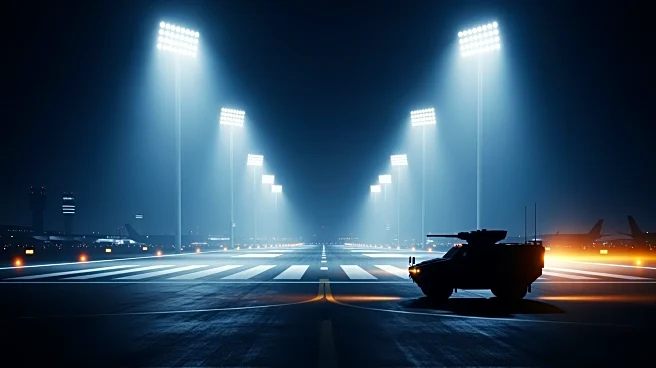
Russia has confirmed its involvement in helping to repel an attack on Niger's main airport in Niamey, which was claimed by the Islamic State group. The attack resulted in 20 attackers being killed and
four army soldiers wounded. The Russian Ministry of Defence's African Corps, in collaboration with the Nigerien armed forces, played a key role in defending the airport. This incident highlights Russia's increasing military presence and influence in Africa, as it seeks to build new partnerships in the region following its isolation from the West due to the war in Ukraine.
Why It's Important?
Russia's growing influence in Africa represents a significant shift in the geopolitical landscape, as Moscow seeks to expand its political, economic, and military footprint in the region. This development could alter the balance of power in Africa and challenge Western interests, particularly in countries where Russia has established a military presence. The involvement of Russian forces in repelling the attack in Niger underscores Moscow's commitment to strengthening its alliances and countering extremist threats in the Sahel region. This could lead to increased competition between global powers for influence in Africa.
What's Next?
As Russia continues to expand its presence in Africa, Western countries may need to reassess their strategies and engagement in the region. This could involve increasing diplomatic efforts, providing economic assistance, and enhancing security cooperation with African nations to counterbalance Russian influence. The situation in Niger and other African countries where Russia is active will be closely monitored for further developments, as Moscow's actions could have broader implications for regional stability and international relations.
Beyond the Headlines
Russia's involvement in Africa raises questions about the long-term implications of its military presence and the potential for increased militarization of the region. The use of military force to support local governments could lead to a reliance on external powers for security, potentially undermining local governance and sovereignty. Additionally, the presence of foreign troops may exacerbate existing tensions and conflicts, complicating efforts to achieve lasting peace and stability in the region.