




What's Happening?
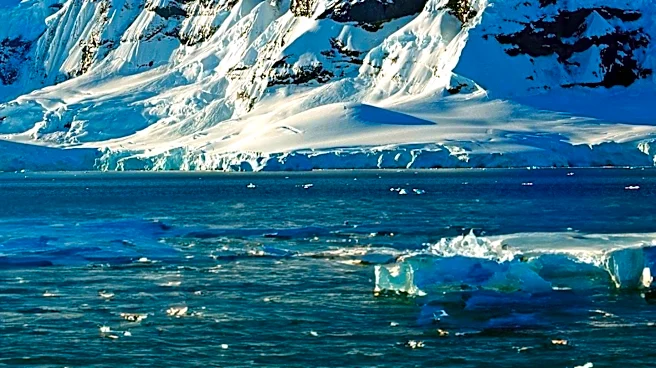
A study led by Dr. Felicity McCormack from Monash University, published in Nature, highlights the potential for significant Antarctic ice loss over the next 30 to 50 years. The research focuses on predicting ice loss from Antarctica and its impact on global
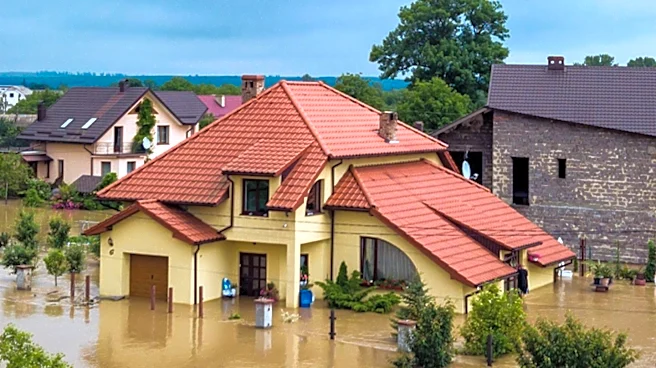
sea levels. The Intergovernmental Panel on Climate Change (IPCC) warns that under high emission scenarios, global sea levels could rise by more than two meters by 2100 if large parts of the Antarctic Ice Sheet collapse. This could lead to widespread flooding, making large areas uninhabitable and displacing millions. The study emphasizes the importance of accurate predictions for government policy and coastal planning, noting that ice loss is predictable until the mid-century, providing a window for action.
Why It's Important?
The findings underscore the urgency of climate action, as the predictability of Antarctic ice loss offers a crucial period for adaptation planning. Accurate predictions can inform infrastructure development and policy decisions, potentially mitigating the humanitarian and economic crises associated with rising sea levels. Countries like Australia and Pacific Island nations face significant risks, with potential impacts on residential properties and sovereign territories. The study calls for improved observational systems and ice sheet models to enhance reliability of sea level projections, highlighting a foreign policy opportunity for Australia to engage with Indo-Pacific partners on adaptation strategies.
What's Next?
The research suggests a two-stage approach to policy development, focusing on short-term predictions with greater confidence and acknowledging long-term uncertainties. Governments are encouraged to incorporate ice sheet model projections into sea level rise policies, using reliable short-term estimates for planning while continuing to develop models for long-term projections. The study advocates for international collaboration to address the challenges posed by Antarctic ice loss, emphasizing the need for ongoing research and adaptation strategies to manage future risks.
Beyond the Headlines
The study highlights the ethical and cultural dimensions of climate change, as rising sea levels threaten to displace communities and disrupt ecosystems. The potential loss of cultural heritage and biodiversity underscores the need for comprehensive adaptation strategies. The research also points to the importance of global cooperation in addressing climate change, as the impacts of Antarctic ice loss extend beyond national borders, affecting global stability and security.