

What's Happening?
The Philippine Navy is intensifying efforts to monitor and protect its subsea cables from potential sabotage and espionage. This move comes amid rising concerns over incidents of cable-cutting in regions such as the Taiwan Strait, Red Sea, and Baltic
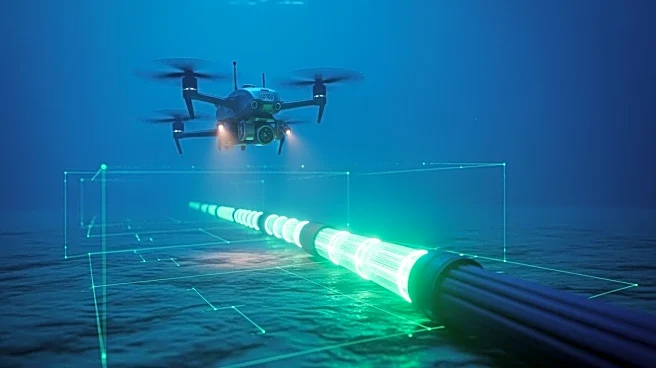
Sea. Nestor Gerico, deputy director general of the Philippines’ National Security Council, has indicated that the frequency of these incidents suggests they are not merely accidental but potential acts of aggression. The Navy, under the leadership of Rear Adm. Roy Vincent Trinidad, is exploring surveillance techniques to capture detailed imagery of underwater terrains, which will help in monitoring environmental changes and identifying areas of concern. The Philippines has also acquired unmanned surface vessels from the United States to bolster maritime surveillance. These efforts are part of a broader strategy to safeguard critical infrastructure from espionage, particularly amid allegations of Chinese sleeper agents and espionage activities within the country.
Why It's Important?
The protection of undersea cables is crucial as they are vital for global communications, economics, and trade. The Philippines' actions highlight the growing geopolitical tensions in Southeast Asia, particularly with China's increasing maritime activities. The potential tapping or sabotage of these cables could have significant implications for international data security and economic stability. The involvement of the United States in supporting the Philippines underscores the strategic importance of the region and the need for international cooperation to counter potential threats. The situation also reflects broader concerns about China's influence and activities in the region, which could impact U.S. interests and alliances.
What's Next?
The Philippine Navy is expected to continue enhancing its surveillance capabilities and may seek further international cooperation to protect its maritime interests. The ongoing modernization of its military assets, including the acquisition of both manned and unmanned platforms, will likely be a focus. Additionally, the Philippines may engage in more joint exercises with allies like the United States to strengthen its defense posture. The situation could lead to increased diplomatic engagements and discussions on regional security frameworks to address the challenges posed by espionage and maritime security threats.