



What's Happening?
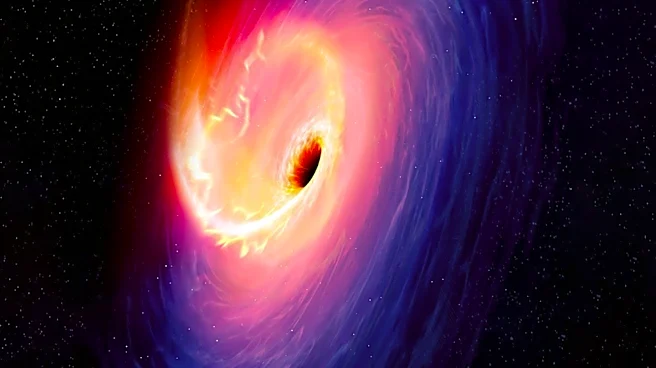
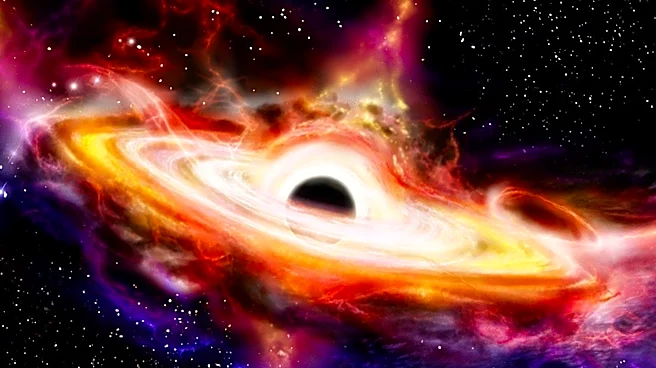
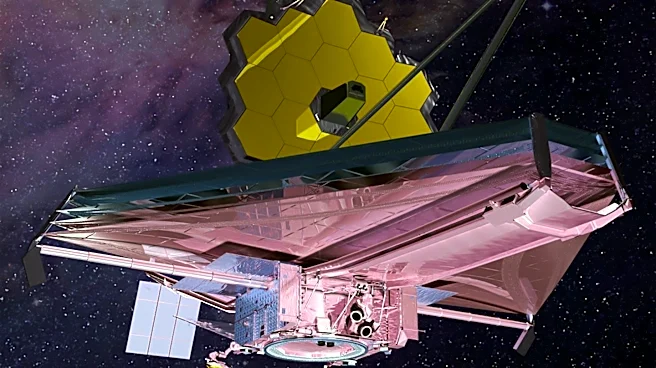
Astronomers using NASA's Chandra X-ray Observatory have discovered a black hole growing at one of the fastest rates ever recorded. Located about 12.8 billion light-years from Earth, this black hole is seen as it was only 920 million years after the universe
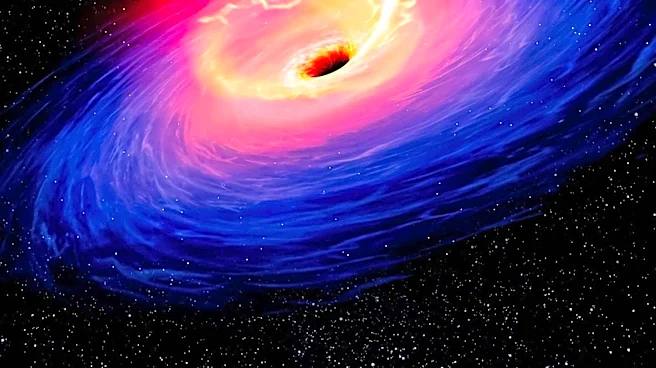
began. It is producing more x-rays than any other black hole observed in the first billion years of the universe. The black hole powers a quasar, an extremely bright object that outshines entire galaxies, by funneling large amounts of matter into it.
Why It's Important?
This discovery is crucial for understanding how some black holes can reach enormous masses relatively quickly after the Big Bang. The black hole's rapid growth challenges existing theories about black hole formation and growth rates, suggesting that some black holes may have been born with much larger masses than previously thought. This finding could lead to new insights into the conditions of the early universe and the processes that led to the formation of massive black holes.
What's Next?
Researchers will continue to study this black hole to understand its growth mechanisms and origins. By analyzing the mass and growth rate, astronomers aim to test different theories about black hole formation. This could involve further observations with other telescopes and instruments to gather more data on similar black holes, potentially leading to a revision of current models of black hole evolution.