
What's Happening?
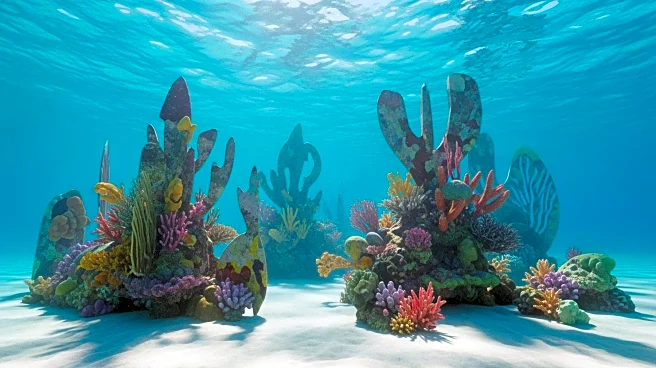
Reefline, an innovative underwater sculpture park off Miami's shoreline, is merging art, science, and conservation to combat the effects of climate change on South Florida's marine ecosystems. Founded
by cultural entrepreneur Ximena Caminos, the project aims to restore coral and marine habitats by providing structures for marine life to thrive. The initiative, which began with a $5 million grant from the City of Miami Beach, is set to span seven miles and involve numerous artists creating underwater installations. The first phase features Leandro Erlich's 'Concrete Coral,' a series of 22 concrete car sculptures submerged near South Beach, designed to support coral growth and marine biodiversity.
Why It's Important?
Reefline represents a pioneering approach to addressing environmental challenges through the integration of art and science. As Miami Beach faces rising sea levels, this project offers a sustainable solution that not only enhances marine life but also serves as a public art installation accessible to divers and swimmers. It highlights the potential for cities to creatively tackle climate issues while fostering cultural engagement. The project underscores the importance of local involvement, with Miami-based artists and curators leading the initiative, ensuring it resonates with the community and reflects the city's unique environmental and cultural landscape.
What's Next?
Reefline is an 11-phase project requiring approximately $40 million to complete. Future phases include the installation of 'Miami Reef Star,' a sculpture by Carlos Betancourt and Alberto Latorre, scheduled for 2026. As the project progresses, it is expected to draw attention from both environmentalists and art enthusiasts, potentially inspiring similar initiatives globally. The ongoing development will likely involve collaboration with scientists to monitor the ecological impact and ensure the installations continue to support marine life effectively.
Beyond the Headlines
Reefline's innovative approach could redefine public art by demonstrating how artistic endeavors can contribute to environmental conservation. It challenges traditional notions of art spaces by situating them underwater, making them part of a living ecosystem. This project may influence future public art projects to incorporate sustainability and community involvement, setting a precedent for how cities can address climate change through creative and inclusive means.