





What's Happening?
Congressman Bob Onder, alongside U.S. Senators Josh Hawley and Eric Schmitt, is facing public criticism from Jefferson City resident Sue Gibson. Gibson's opinion piece in the Jefferson City News Tribune calls for these officials to publicly demand the immediate
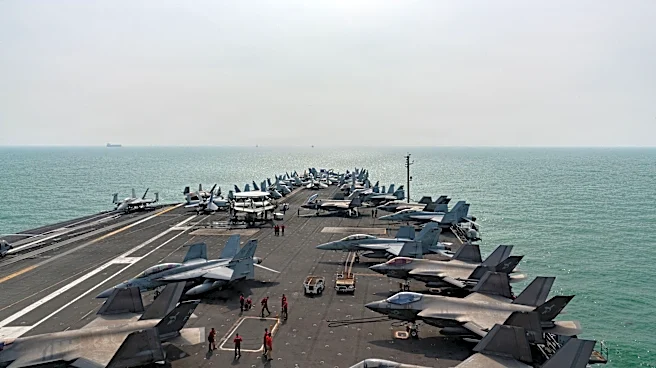
and safe return of the crew of the USS Abraham Lincoln. The warship's sailors have reportedly been deployed for over 250 days without a port call, enduring food shortages, unsanitary conditions, and a severe mental health crisis, including suicidal ideations among crew members. Gibson urges the lawmakers to push for public oversight hearings into the duration and impact of these deployments, and to hold Secretary Hegseth accountable for allegedly denying the families' reports. The criticism highlights a perceived failure of these elected officials to advocate for military service members, especially given President Trump's recent statement that the eight-plus-month deployment has not been long enough.
Why It's Important?
This situation is important as it underscores concerns regarding the welfare of U.S. military personnel during extended deployments and the accountability of elected officials in addressing these issues. The reported conditions on the USS Abraham Lincoln—food shortages, unsanitary environments, and a mental health crisis—raise serious questions about the support systems in place for service members and the oversight mechanisms for long-term deployments. The call for public oversight hearings suggests a broader desire for transparency and reform in military deployment policies. Furthermore, the criticism directed at Congressman Onder and Senators Hawley and Schmitt highlights the political implications of perceived inaction on military welfare, potentially affecting their public image and constituent trust. The involvement of President Trump's comments adds another layer of political complexity, suggesting a potential disconnect between the administration's stance and the concerns of military families and advocates.
What's Next?
The immediate next steps could involve increased public pressure on Congressman Onder, Senator Hawley, and Senator Schmitt to respond to the demands for the USS Abraham Lincoln crew's return and for oversight hearings. Military families and advocacy groups may intensify their efforts to bring attention to the conditions on the warship and the broader issue of prolonged deployments. Should the lawmakers choose to act, they could initiate formal inquiries, propose legislation, or engage directly with military leadership and the administration to address the concerns. Conversely, continued inaction could lead to further public outcry and potentially impact their political standing. The situation may also prompt a wider discussion within Congress and the Department of Defense regarding the policies and protocols for extended naval deployments, particularly concerning crew well-being and mental health support.
Beyond the Headlines
Beyond the immediate concerns for the USS Abraham Lincoln crew, this situation touches upon deeper ethical and systemic issues within the U.S. military and political landscape. The reported mental health crisis and suicidal ideations among crew members highlight the profound psychological toll of prolonged deployments, raising questions about the adequacy of mental health resources and support for service members. The perceived reluctance of elected officials to challenge the administration on military welfare, as suggested by Gibson, could indicate a broader pattern of political deference that potentially compromises the well-being of those in uniform. This incident could also spark a re-evaluation of the balance between strategic military objectives and the human cost of achieving them, potentially leading to reforms in deployment durations, conditions, and post-deployment support. It also underscores the power of public opinion and media in holding elected officials accountable for their responsibilities to military personnel and their families.