
What's Happening?
The West Coast of the United States is preparing for a series of major storms that are expected to bring significant snowfall and heavy rain, providing much-needed relief to areas suffering from severe
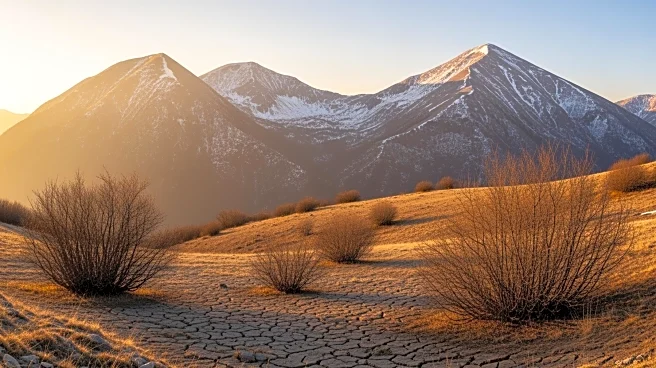
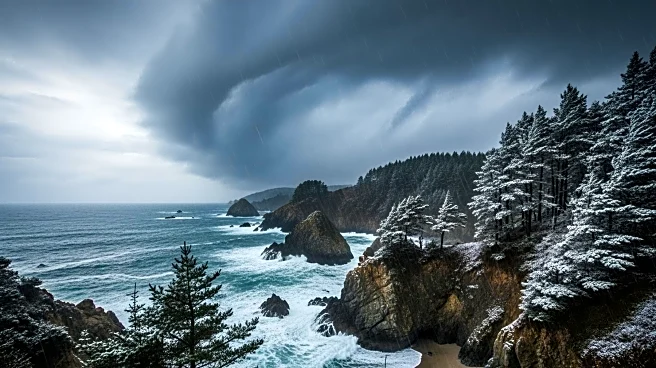
drought conditions. The Upper Colorado Basin is experiencing record low snow levels, with Salt Lake City, Utah, and Grand Junction, Colorado, having gone 330 and 442 days, respectively, without significant snowfall. A large dip in the jet stream is anticipated to stall over the region starting Sunday, initiating an active weather pattern. This will result in multiple storms delivering substantial snow to mountain areas and rain to lower elevations. The system will begin in California, where a strong low-pressure area will impact the region, followed by additional storms bringing heavy rain. The FOX Forecast Center predicts that some mountain areas could receive double-digit feet of snow, while lower areas like Los Angeles and San Diego could see up to 5 inches of rain, raising concerns about flash flooding, particularly in areas affected by last year's wildfires.
Why It's Important?
The incoming storms are crucial for alleviating the severe drought conditions affecting the Western United States. The anticipated precipitation will help replenish water supplies in snow-starved regions such as the Sierra Nevada, Rockies, and Colorado Basins. This is particularly important for agricultural activities, water management, and ecological balance in these areas. However, the heavy rainfall also poses risks of flash flooding, especially in regions with burn scars from previous wildfires. The storms highlight the ongoing challenges of managing extreme weather patterns and their impacts on communities and infrastructure. The situation underscores the need for effective disaster preparedness and response strategies to mitigate potential damages and ensure public safety.
What's Next?
As the storms approach, local authorities and residents are likely to prepare for potential flooding and other weather-related disruptions. Emergency services may be on high alert to respond to any incidents, and communities in vulnerable areas might be advised to take precautionary measures. The National Oceanic and Atmospheric Administration (NOAA) Climate Prediction Center forecasts that the West will continue to experience above-average precipitation through the end of February, suggesting that the region may face ongoing weather challenges. Monitoring and adaptive management will be essential to address the evolving situation and minimize adverse impacts.