
What's Happening?
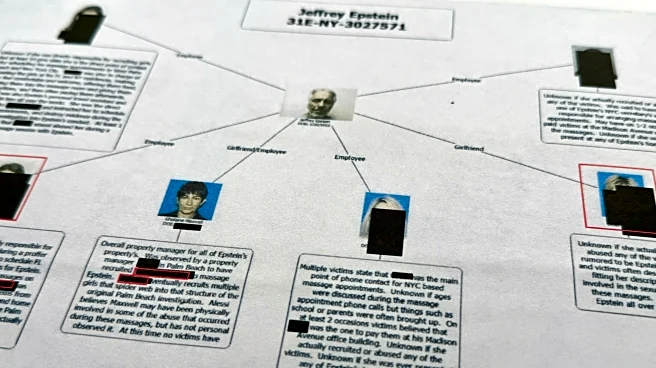
The Department of Justice has released a portion of the documents known as the Epstein files, just before a deadline set by Congress. These files include thousands of documents and over 3,000 photos from
Jeffrey Epstein's residences in New York City and the U.S. Virgin Islands. The release has been heavily redacted, with many images showing Epstein and his associate Ghislaine Maxwell in various locations, often with prominent figures such as former President Bill Clinton. The files also contain a legal complaint involving President Trump, Epstein, and a minor, though the details are sparse. The release has been criticized for its timing and the extent of redactions, which some claim are politically motivated.
Why It's Important?
The release of the Epstein files is significant as it touches on issues of transparency and accountability within the U.S. government. The files have the potential to impact public perception of political figures and institutions, given Epstein's connections with high-profile individuals. The redactions have fueled speculation and conspiracy theories, particularly regarding the involvement of political figures. The release also highlights ongoing concerns about the handling of Epstein's case and the protection of his victims. The files' contents could influence public trust in the justice system and the current administration's commitment to transparency.
What's Next?
The release of these files is likely to lead to further scrutiny and demands for more transparency. Victims of Epstein and their advocates may continue to push for a more comprehensive release of information. The political implications could lead to increased tensions between parties, especially if further evidence emerges implicating political figures. The Department of Justice may face pressure to justify the extent of the redactions and the timing of the release. Public and media interest in the case is expected to remain high, potentially leading to further investigations or legal actions.
Beyond the Headlines
The Epstein files' release underscores the complex interplay between politics, media, and public perception in the U.S. The redactions, while intended to protect privacy, may inadvertently contribute to a culture of mistrust and conspiracy theories. This situation reflects broader societal issues regarding the transparency of powerful individuals and institutions. The case also raises ethical questions about the balance between privacy and the public's right to know, particularly in cases involving criminal activity and high-profile figures.