



What's Happening?
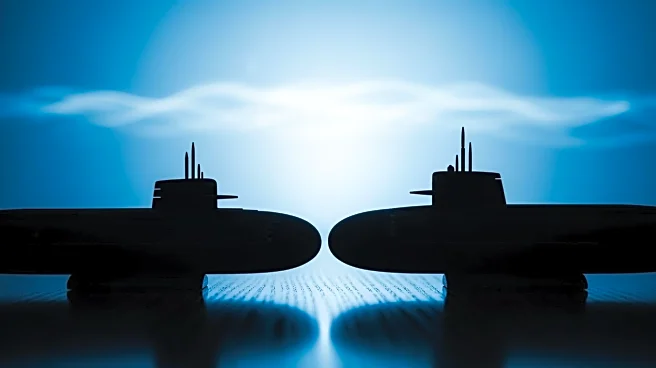
Brazil and India have entered into a memorandum of understanding (MOU) to enhance cooperation on their respective submarine programs. The agreement involves the Brazilian Navy's General Directorate of Navy Materiel (DGMM), the Indian Navy, and the Indian state-owned
shipbuilder Mazagon Dock Shipbuilders Limited (MDL). This collaboration focuses on the Scorpène-type, diesel-electric-powered multirole attack submarines. The MOU aims to improve operational availability and life-cycle support through technical and industrial cooperation. It also facilitates the exchange of information, spare parts support, training of submarine maintenance personnel, and joint development of technologies. Brazil's Itaguaí Construções Navais (ICN) has built four Scorpène-based Riachuelo-class submarines, while India's MDL has constructed six Kalvari-class submarines. Both classes are equipped with advanced combat systems and sonar suites.
Why It's Important?
This agreement marks a significant step in strengthening defense ties between Brazil and India, two major emerging economies with growing naval capabilities. By collaborating on submarine technology and maintenance, both countries can enhance their maritime security and operational readiness. The exchange of technical expertise and resources is likely to lead to cost efficiencies and improved performance of their naval fleets. This partnership also reflects a broader trend of strategic defense collaborations among non-Western countries, potentially shifting the global defense landscape. For the U.S., this development could influence defense policy and military strategy in regions where Brazil and India have strategic interests.
What's Next?
The MOU sets the stage for further collaboration between Brazil and India in the defense sector. Both countries are expected to engage in joint training exercises and technology development initiatives. The agreement may also pave the way for future defense contracts and partnerships, potentially involving other areas of military technology. Stakeholders in the defense industry will likely monitor this partnership closely, as it could lead to new opportunities for international cooperation and innovation in submarine technology.