





What's Happening?
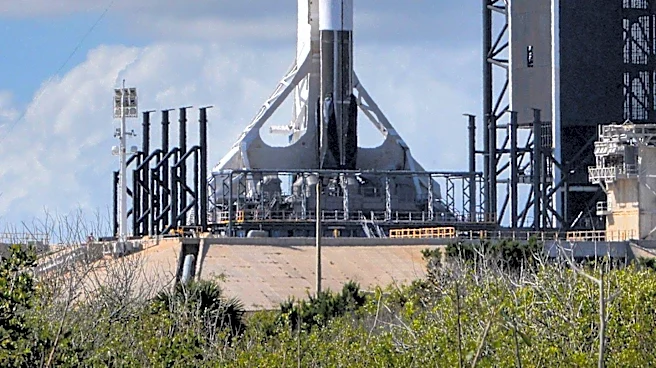
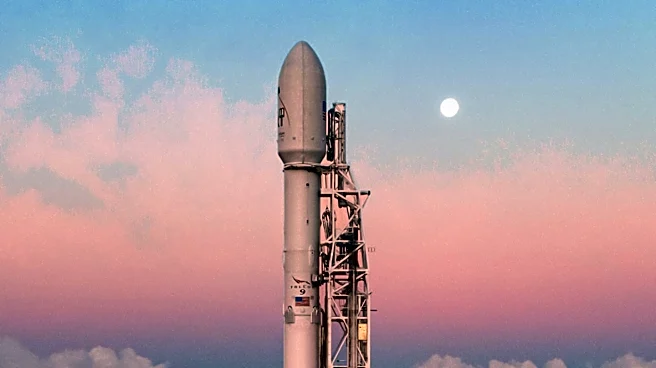
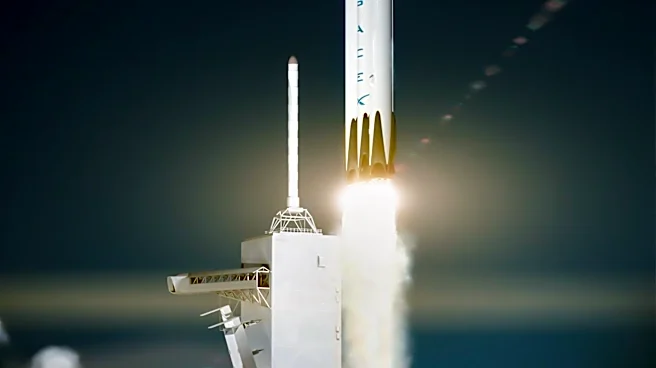
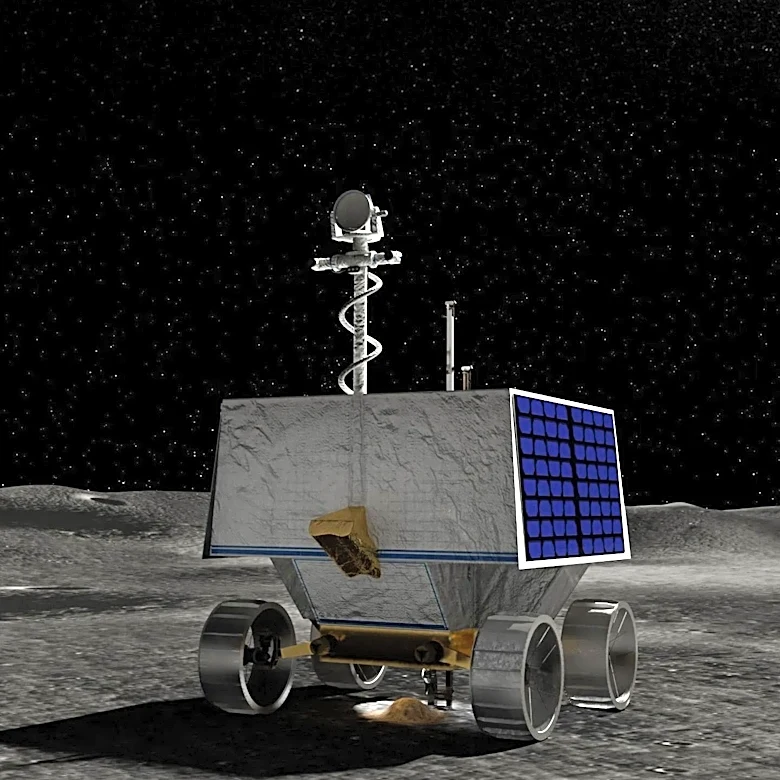
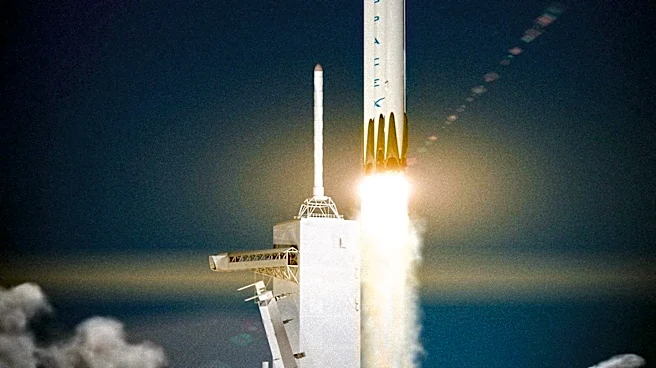
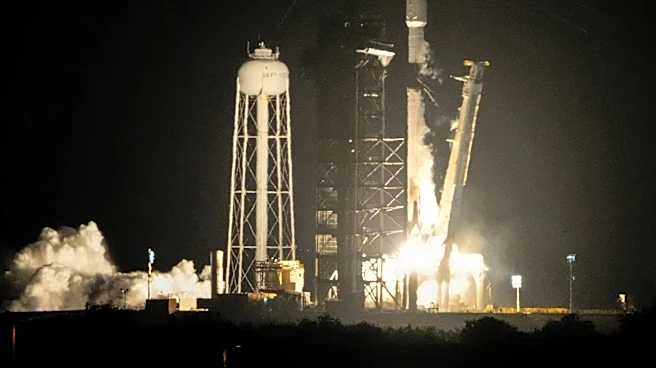
The upper stage of a SpaceX rocket, which delivered two lunar landers in early 2025, is set to crash into the moon at an estimated speed of 5,400 mph. This event is significant as it will be one of the few times an object impacts the moon while being
observed. NASA's Lunar Reconnaissance Orbiter and South Korea's Danuri lunar orbiter will capture before-and-after images of the impact site. The impact is expected to release energy equivalent to three tons of TNT, potentially ejecting material visible through telescopes due to the moon's lack of atmosphere. This event follows NASA's history of deliberate lunar impacts for scientific research, such as the Apollo missions and the 2009 LCROSS mission.
Why It's Important?
This event is crucial for scientific research as it provides a rare opportunity to study the effects of high-speed impacts on the lunar surface. The data collected could inform future lunar missions, particularly regarding the potential hazards of space debris. As space exploration intensifies, understanding these impacts is vital for the safety of future lunar bases and missions. The event also highlights the growing international collaboration in space exploration, with both NASA and South Korea involved in monitoring the impact.
What's Next?
Following the impact, scientists will analyze the data collected by the orbiters to assess the impact's effects on the lunar surface. This analysis could lead to new insights into lunar geology and the behavior of space debris. The findings may influence future mission planning and the development of strategies to mitigate the risks posed by space debris. Additionally, the event may prompt discussions on international policies regarding space debris management.