
What's Happening?
Airlines worldwide have suspended routes and rerouted flights following U.S. and Israeli strikes on Iran, leading to significant airspace closures and airport disruptions. According to Flightradar24, at least 145 flights in the Middle East were diverted
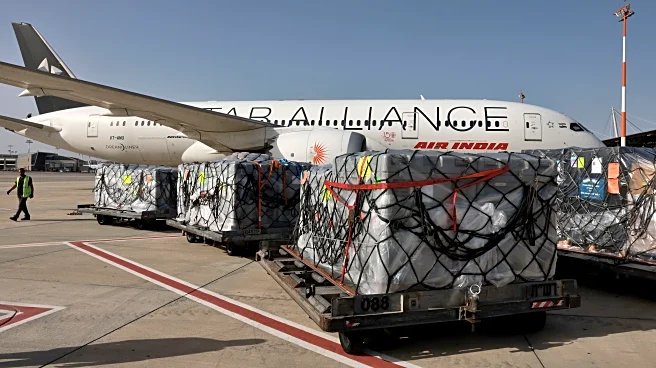
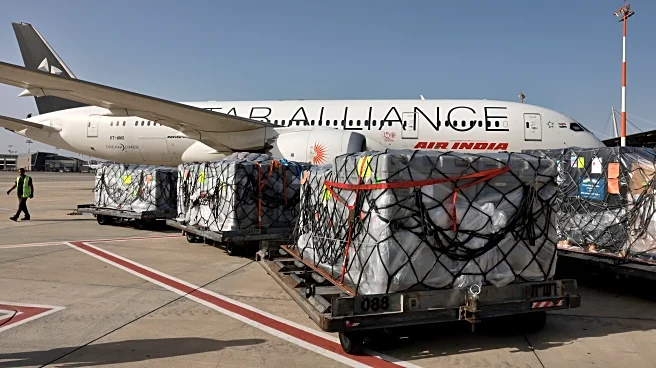
to 73 destinations, affecting major transit hubs between Europe and Asia. Civil and commercial airspace over Iran, Iraq, Kuwait, Bahrain, and Qatar was closed, impacting operations at key Gulf hubs like Doha and Dubai. Airlines such as Lufthansa, British Airways, Qatar Airways, and Emirates have temporarily suspended services, while others like Air India and Wizz Air have paused flights to affected regions. Passengers at major airports, including Tel Aviv and Beirut, faced immediate disruptions, with long queues forming as travelers sought rebooking and refunds.
Why It's Important?
The suspension of flights and rerouting of air traffic have significant implications for global travel and commerce, particularly affecting the Europe-Asia transit routes. The Middle East's role as a central hub for these routes means that disruptions can lead to widespread delays and cancellations, impacting passengers and cargo alike. The situation exacerbates existing challenges in the aviation industry, which is still recovering from the COVID-19 pandemic and dealing with restricted airspace over Russia and Ukraine. Airlines are prioritizing safety and customer service, offering rebooking and refunds, but the fluid situation requires ongoing adjustments. The disruptions highlight the vulnerability of global air travel to geopolitical tensions and the need for contingency planning.
What's Next?
As the situation remains fluid, airlines and civil aviation authorities are closely monitoring developments and updating flight schedules in real-time. Passengers with travel plans involving the Middle East are advised to check live updates from their airlines and prepare for potential further changes. The ongoing conflict and airspace restrictions may lead to prolonged disruptions, requiring airlines to continue adjusting operations and potentially rerouting flights through alternative paths. The aviation industry will need to navigate these challenges while ensuring passenger safety and minimizing inconvenience.