


What's Happening?
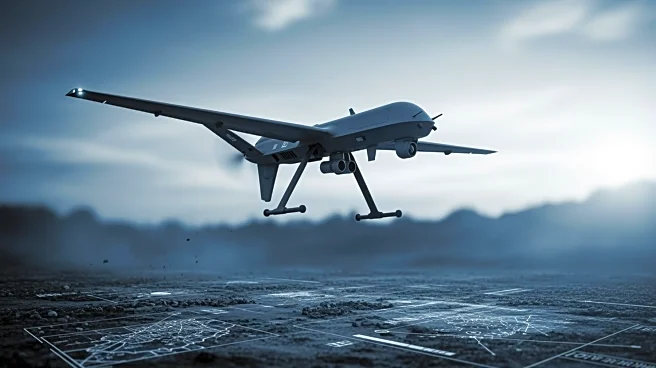
The U.S. Army is set to deploy the Bumblebee V2 drone interceptor, a new technology designed to counter unmanned aerial threats. This development follows a $5.2 million contract awarded by the Pentagon to Perennial Autonomy. The Bumblebee V2 is a first-person
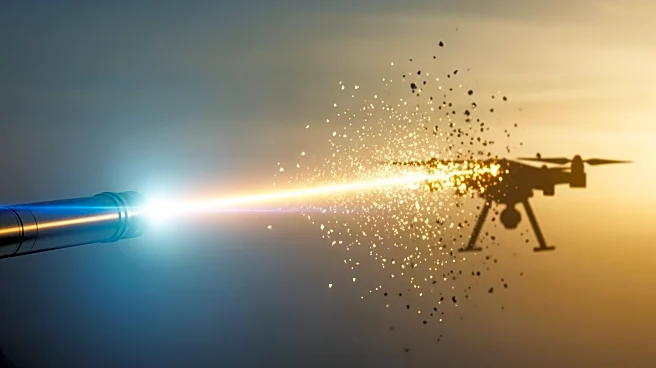
view drone equipped with advanced artificial intelligence software, enabling it to identify and engage other drones in combat. It operates by physically colliding with target drones, a method known as 'hard kill,' which minimizes collateral damage by avoiding the use of munitions. The system is compliant with the National Defense Authorization Act's regulations, ensuring it meets strict requirements for military use. The Army's Global Response Force will begin assessing the Bumblebee V2 in March, with the aim of integrating it into operations to enhance the protection of U.S. forces against drone threats.
Why It's Important?
The introduction of the Bumblebee V2 drone interceptor is significant for U.S. military operations, particularly in environments where drones pose a constant threat. This technology provides a cost-effective and reliable means of neutralizing aerial threats without endangering personnel or infrastructure. The ability to engage drones directly reduces the risk of collateral damage, making it suitable for use in urban areas. As drones become increasingly prevalent in modern warfare, having a low-collateral kinetic option is essential for maintaining operational security and effectiveness. The deployment of the Bumblebee V2 reflects the U.S. military's commitment to advancing its capabilities in drone warfare and ensuring compliance with national defense regulations.
What's Next?
The U.S. Army's Global Response Force will conduct assessments of the Bumblebee V2 at the Lt. Gen. James M. Gavin Joint Innovation Outpost, a facility dedicated to developing and testing new military technologies. This evaluation will determine the system's effectiveness and potential integration into broader military operations. The success of these assessments could lead to wider adoption of the Bumblebee V2 across various military branches, enhancing the U.S. military's ability to counter drone threats. Additionally, the system's compliance with the National Defense Authorization Act may pave the way for further innovations in drone technology that adhere to strict regulatory standards.