





What's Happening?
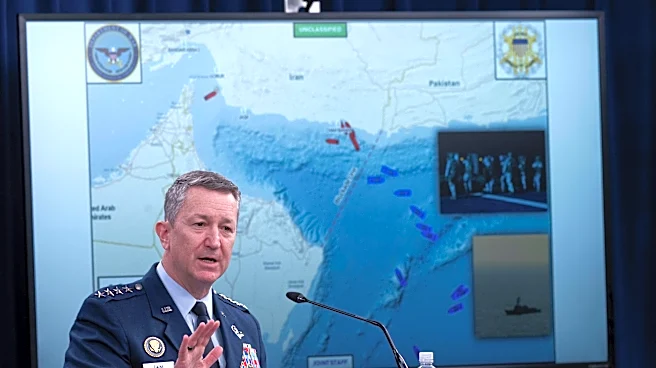
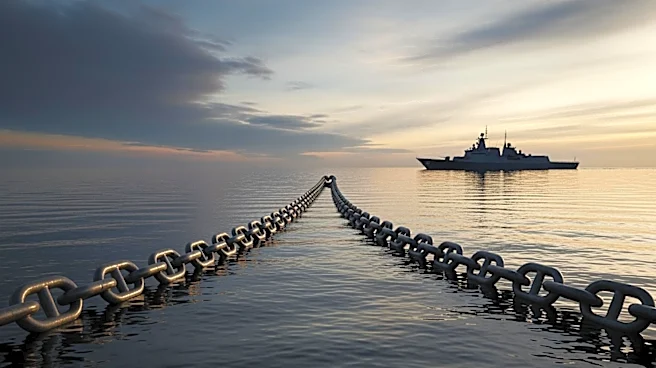
The U.S. military has initiated a naval blockade against Iran, compelling ships to turn away from Iranian ports. This action follows unsuccessful ceasefire talks between U.S. and Iranian officials, leading to heightened tensions. The blockade is part
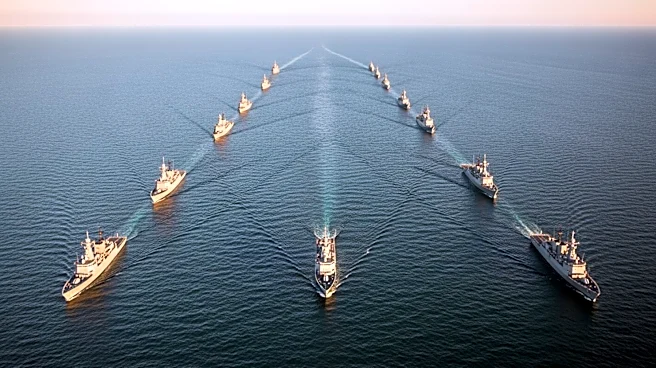
of a broader strategy to pressure Iran by targeting its oil exports without direct military strikes. Over 10,000 U.S. personnel, along with numerous ships and aircraft, are involved in enforcing the blockade, which extends into both territorial seas and international waters. The operation aims to disrupt Iran's economic lifeline while maintaining military readiness to escalate if necessary. Pentagon leaders have emphasized the U.S. military's capability to transition quickly from containment to combat operations if the situation deteriorates.
Why It's Important?
The blockade represents a significant escalation in U.S.-Iran relations, with potential implications for global oil markets and regional stability. By targeting Iran's oil exports, the U.S. seeks to exert economic pressure without immediate military conflict. However, the blockade risks disrupting global oil supplies, as the Strait of Hormuz is a critical chokepoint for the world's oil flow. The situation underscores the fragile nature of the ceasefire and the potential for renewed hostilities, which could have far-reaching consequences for international energy markets and geopolitical alliances. The U.S. strategy reflects a balance between diplomatic pressure and military readiness, highlighting the complexities of managing international conflicts.
What's Next?
The continuation of the blockade and its enforcement will likely depend on Iran's response and the outcome of any further diplomatic engagements. The U.S. has signaled its readiness to resume combat operations if necessary, maintaining a posture of deterrence. The situation could lead to increased involvement from international partners, as the U.S. has called for greater contributions to maritime security from global allies. The potential for escalation remains high, with the blockade serving as both a pressure tactic and a deterrent against further Iranian aggression. Monitoring the impact on global oil markets and regional stability will be crucial in the coming weeks.