






What's Happening?
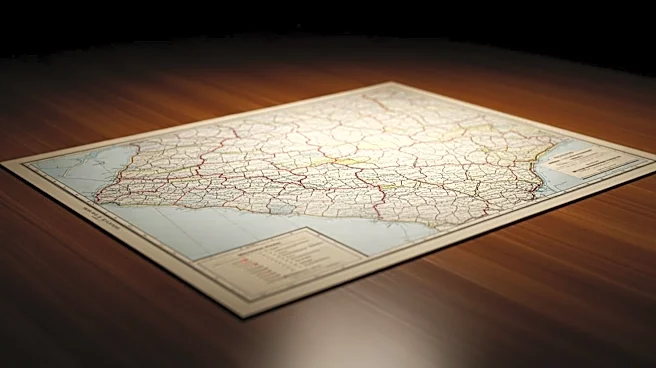
Democrats' chances of regaining control of the House of Representatives have decreased as several Republican-led states in the South have redrawn their congressional maps. This redistricting effort follows the U.S. Supreme Court's decision in Callais
v. Louisiana, which struck down a second majority-Black district in Louisiana. The ruling has emboldened other conservative states to adjust their maps, potentially allowing Republicans to gain seats. Prediction markets like Kalshi and Polymarket have shown a decline in Democrats' chances of flipping the House, with Kalshi reporting a drop from 86% to 74% and Polymarket from 87% to 80% over the past month. Despite these setbacks, Democrats still hold a lead in generic ballot polls, but the redistricting changes mean they will need a larger margin to secure a majority.
Why It's Important?
The redistricting efforts in Southern states could significantly impact the balance of power in the U.S. House of Representatives. By redrawing district lines, Republicans may secure additional seats, complicating Democrats' efforts to regain control. This shift could influence legislative priorities and the ability to pass key policies. The changes also raise concerns about minority representation, as some redistricting plans aim to dismantle majority-Black districts. The outcome of these efforts will affect political strategies and voter engagement leading up to the 2026 midterm elections.
What's Next?
As redistricting continues, both parties are likely to engage in legal battles and strategic planning to maximize their electoral advantages. Georgia has announced a special session to consider redistricting, and other states may follow suit. Democrats are expected to challenge unfavorable maps in court, while Republicans will aim to solidify their gains. The evolving political landscape will require both parties to adapt their campaign strategies to address the new district configurations and voter demographics.