



What's Happening?
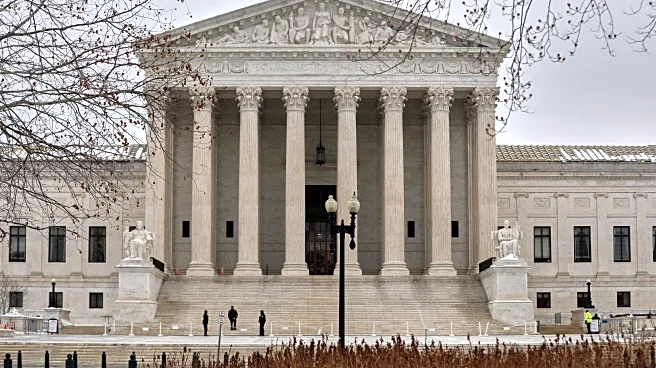
Supreme Court Justices Ketanji Brown Jackson and Brett Kavanaugh publicly discussed their differing views on the court's use of the emergency docket during a joint appearance. Justice Jackson criticized the court's increasing reliance on emergency orders,
arguing that it distorts the judicial process. Justice Kavanaugh defended the practice, attributing the rise in emergency petitions to congressional gridlock and the need for executive action. This discussion highlights the ongoing debate within the court about its role in handling urgent cases and the implications for judicial transparency and accountability.
Why It's Important?
The use of the emergency docket has significant implications for the judicial process and the balance of power between the branches of government. Critics argue that it allows for major policy changes without thorough legal scrutiny, potentially setting precedents that could affect future administrations. The court's decisions on these emergency cases can have lasting impacts on U.S. law and governance, influencing public policy and the legal landscape. This internal conflict within the Supreme Court reflects broader tensions in U.S. politics and governance.
What's Next?
The debate over the emergency docket is likely to continue, with potential implications for how the Supreme Court handles future urgent cases. Legal scholars and policymakers may call for reforms to increase transparency and accountability in the court's decision-making process. The outcome of this debate could influence the court's approach to executive actions and its role in the U.S. political system.