
What's Happening?
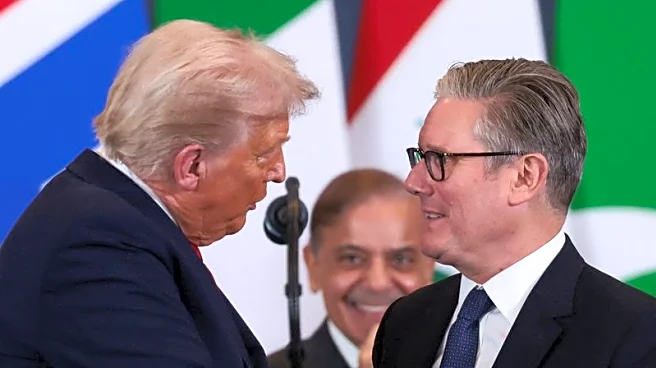
UK Prime Minister Keir Starmer officially recognized a Palestinian state in September 2025, amidst the ongoing Israel-Hamas conflict. This decision was part of a broader call by Western leaders for a peace
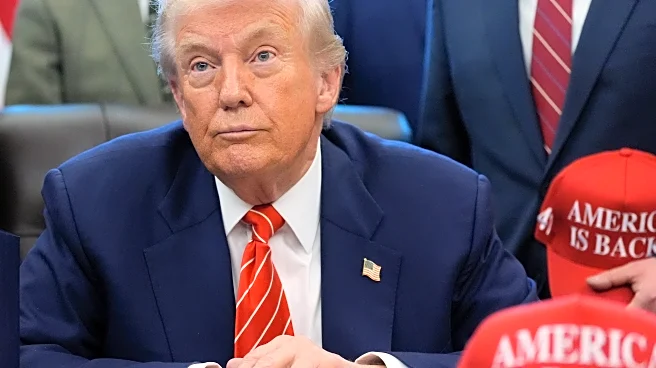
framework aimed at reforming the Palestinian Authority, establishing a ceasefire in Gaza, and resuming negotiations for a two-state solution. The recognition was seen as a move to keep the possibility of a viable Palestinian state alive. Despite this endorsement, no new diplomatic efforts followed immediately. However, a ceasefire and hostage deal were brokered in October by US President Donald Trump. The UK maintains a consulate in Jerusalem for diplomatic representation in the West Bank and Gaza, but it is unclear if there are plans to open an official embassy in the Palestinian territories.
Why It's Important?
The recognition of a Palestinian state by the UK, along with other countries like Australia and Canada, marks a significant diplomatic stance in the ongoing Israeli-Palestinian conflict. It underscores a shift in international perspectives towards supporting a two-state solution, which could influence future peace negotiations. This move may also impact the geopolitical dynamics in the region, potentially encouraging other nations to follow suit. The lack of immediate diplomatic follow-up, however, highlights the complexities and challenges in achieving lasting peace. The involvement of President Trump in brokering a ceasefire indicates the continued influence of the US in Middle Eastern affairs.
What's Next?
The next steps could involve increased diplomatic efforts to resume peace negotiations, although the immediate future remains uncertain. The international community may continue to push for reforms within the Palestinian Authority and a sustainable ceasefire in Gaza. The UK's recognition could lead to further discussions on establishing official diplomatic missions in Palestinian territories, potentially altering the diplomatic landscape. Reactions from major stakeholders, including Israel and Palestinian leadership, will be crucial in determining the path forward.