






What's Happening?
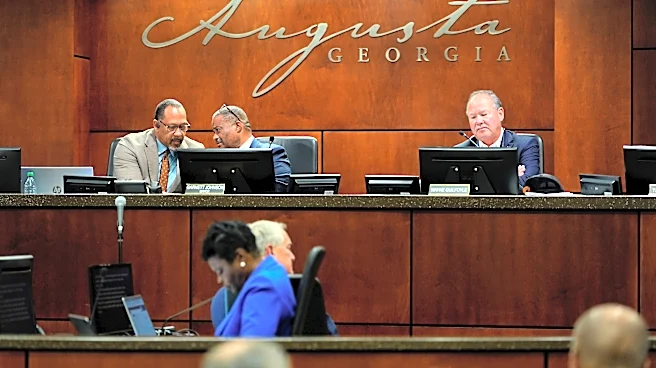
The Lancaster County Council in South Carolina has rejected a two-year extension for the Redstone development in Indian Land. The proposed Ordinance 2026-2055 would have prolonged the development schedule and the county's agreement with Redstone Investors
LLC and Lancaster Real Estate Group LLC until September 12, 2029. The ordinance initially passed its first reading 4-3 but failed on the second reading with a 3-4 vote. Councilwoman Charlene McGriff, who previously supported the extension, expressed concerns about the developer potentially seeking further extensions and emphasized that the risk should lie with the developer, not the county. Residents voiced opposition, arguing that an extension would allow a 2022 project to proceed under outdated rules, just weeks before the county's rewritten Unified Development Ordinance (UDO) is expected to take effect. The Redstone project, approved in 2022, includes approximately 350 apartments, 20 townhomes, and retail space near the intersection of U.S. 521 and S.C. 160, with construction originally scheduled for 2023 but never commenced. In other council business, the new detention center was named the Williford L. Faile Detention Center, honoring former Sheriff Williford L. Faile.
Why It's Important?
This decision by the Lancaster County Council signifies a shift towards prioritizing current regulatory standards and resident concerns over developer requests for extensions. The rejection of the Redstone extension could set a precedent for future development projects in the county, particularly as the new Unified Development Ordinance (UDO) is on the verge of implementation. By not granting the extension, the council is effectively pushing for new developments to adhere to more recent planning and zoning regulations, which are likely designed to address contemporary issues such as traffic congestion and infrastructure demands in rapidly growing areas like Indian Land. This move could lead to more sustainable and community-aligned development, potentially mitigating issues that arise from projects approved under older, less stringent guidelines. For developers, it underscores the importance of timely project execution and adherence to initial timelines, as extensions may no longer be a guaranteed option, especially when new regulations are imminent. The naming of the detention center also reflects a community's recognition of local public service.
What's Next?
With the Redstone extension rejected, the developers, Redstone Investors LLC and Lancaster Real Estate Group LLC, will likely need to re-evaluate their plans for the Indian Land project. They may need to resubmit proposals that comply with the county's upcoming Unified Development Ordinance (UDO) once it takes effect. This could involve significant revisions to the project's scope, density, or design to meet the new standards. The council's decision also signals to other developers that future projects will be held to current or impending regulations, potentially leading to a more rigorous review process for new applications. The county will proceed with the opening of the Williford L. Faile Detention Center in 2027. Additionally, the council advanced an $886,000 budget amendment for renovating a county fleet and technology building and gave initial approval to a small rezoning on Fort Mill Highway, indicating ongoing municipal infrastructure and planning activities.
Beyond the Headlines
The Lancaster County Council's decision to reject the Redstone development extension highlights a broader tension often seen in rapidly developing U.S. communities: the balance between economic growth driven by development and the preservation of community character and infrastructure capacity. The residents' push for the project to adhere to the new Unified Development Ordinance reflects a growing public demand for more thoughtful and sustainable urban planning, especially in areas experiencing significant population influx. This situation underscores the evolving role of local governance in mediating between developer interests and community welfare. It also brings to light the ethical considerations of 'grandfathering' older projects under less stringent rules, particularly when those rules no longer align with current community needs or environmental considerations. The outcome could influence how similar development proposals are handled in other fast-growing counties across the U.S., emphasizing the importance of updated regulations and community input in shaping future landscapes.