



What's Happening?
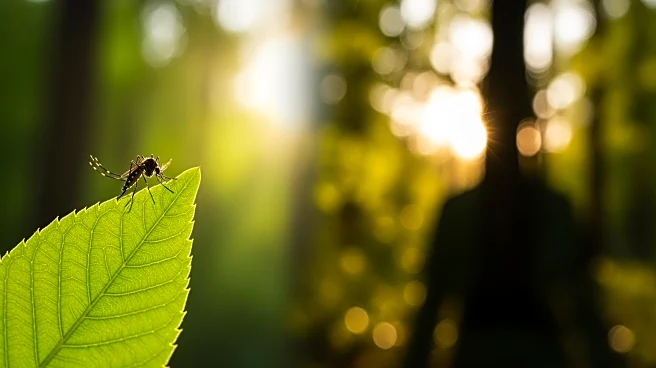
A study conducted by Dr. Sérgio Lisboa Machado and Dr. Jeronimo Alencar from the Universidade Federal do Rio de Janeiro highlights a concerning trend where mosquitoes in the Atlantic Forest are increasingly feeding on human blood. This shift is attributed
to deforestation, which reduces biodiversity and forces mosquitoes to adapt to new food sources. The study, published in Frontiers in Ecology and Evolution, found that as natural habitats are destroyed, mosquitoes that once fed on a variety of animals are now turning to humans. This change raises the risk of spreading diseases such as malaria, dengue, and Zika, as these mosquitoes become new vectors for blood-borne diseases.
Why It's Important?
The findings underscore the broader implications of deforestation on public health. As mosquitoes adapt to human-dominated environments, the likelihood of disease transmission increases, posing significant health risks. This situation is exacerbated by the fact that mosquitoes are highly adaptable and can quickly shift their feeding preferences. The study highlights the need for urgent action to control mosquito populations and prevent the spread of vector-borne diseases. It also calls for a reevaluation of land use policies to mitigate the impact of deforestation on ecosystems and human health.
What's Next?
The researchers suggest that reversing deforestation and restoring natural habitats could help mitigate the risks associated with mosquito-borne diseases. They emphasize the importance of continued research to better understand mosquito feeding behaviors and develop targeted control strategies. Additionally, there is a need for improved surveillance and prevention measures to address the growing threat of vector-borne diseases in areas affected by deforestation.
Beyond the Headlines
The study highlights the interconnectedness of environmental and public health issues. As human activities continue to encroach on natural habitats, the balance of ecosystems is disrupted, leading to unforeseen consequences such as the spread of diseases. This underscores the importance of sustainable development practices that consider the long-term health of both the environment and human populations.