







What's Happening?
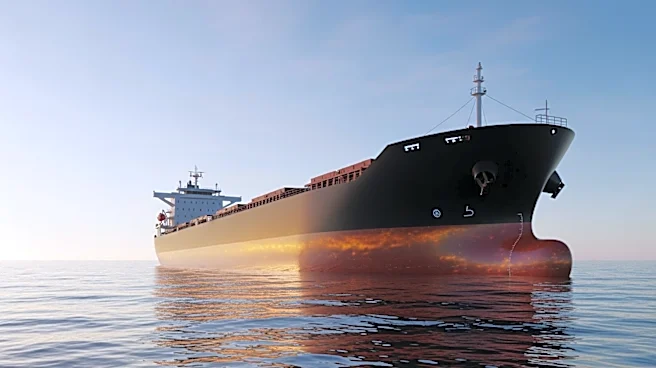
Brazilian mining company Vale has entered into a partnership with China's Shandong Shipping Corporation to construct the first large ocean-going vessels designed to use ethanol as a primary fuel. The agreement includes 25-year contracts for two new ships,
with an option for additional vessels. These ships are an adaptation of the existing Guaibamax design and are part of a multi-fuel strategy. They will be 340 meters long with a 325,000-tonne capacity and capable of using methanol and heavy fuel oil in addition to ethanol. The design also allows for future conversion to liquefied natural gas or ammonia. This initiative follows previous industry exploration of ethanol as a marine fuel, which is noted for being easier to handle than some toxic and corrosive alternatives. Vale emphasizes that ethanol can reduce carbon emissions by approximately 90 percent compared to heavy fuel oil when using second-generation ethanol.
Why It's Important?
The introduction of ethanol-powered bulk carriers represents a significant step towards reducing the environmental impact of maritime shipping. By adopting ethanol, Vale aims to significantly cut carbon emissions, aligning with global efforts to combat climate change. The move could set a precedent for other shipping companies to explore alternative fuels, potentially leading to widespread adoption of cleaner technologies in the industry. This development is crucial for the U.S. and global shipping sectors, as it may influence regulatory standards and fuel choices, impacting operational costs and environmental policies. The partnership also highlights the growing collaboration between international companies in addressing climate change, which could foster further innovation and investment in sustainable technologies.
What's Next?
Vale plans to incorporate several energy efficiency improvements in the new vessels, including rotor sails for wind-assisted propulsion, more efficient engines, and various hydrodynamic and electrical upgrades. These enhancements are expected to reduce greenhouse gas emissions by about 15 percent compared to the current Guaibamax generation. Vale's broader adoption of ethanol extends beyond shipping to include trials on trucks and locomotives within its logistics operations. As the shipping industry continues to seek sustainable solutions, other companies may follow suit, potentially leading to increased research and development in alternative fuels and technologies.
Beyond the Headlines
The shift towards ethanol-powered vessels may have broader implications for the global ethanol market, potentially increasing demand and influencing production strategies. Ethanol's role as a cleaner alternative could drive innovation in fuel technology, encouraging investment in second-generation ethanol production. Additionally, the collaboration between Vale and Shandong Shipping underscores the importance of international partnerships in advancing sustainable practices, which could lead to more cross-border initiatives aimed at reducing environmental impact.