



What's Happening?
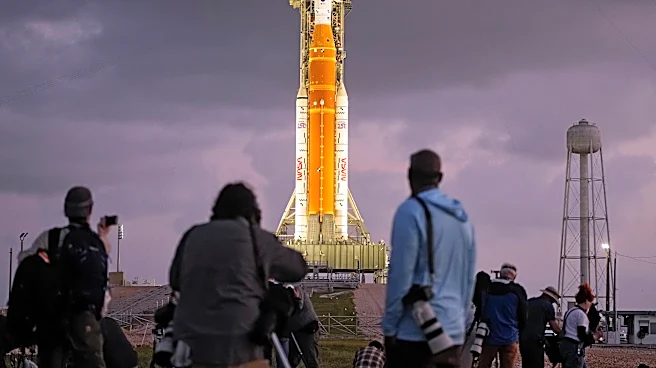
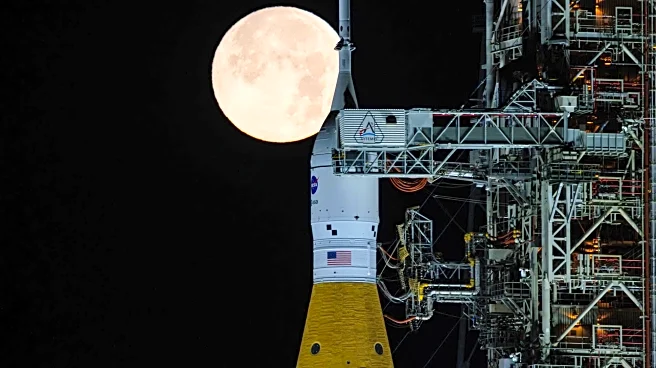
NASA is preparing for the launch of Artemis II, a mission that will send four astronauts on a 10-day journey around the moon. This mission marks the first time humans will travel beyond low Earth orbit since the Apollo era. The crew, consisting of Reid
Wiseman, Victor Glover, Christina Koch, and Canadian astronaut Jeremy Hansen, will fly aboard the Orion spacecraft. The mission aims to test the spacecraft's performance with humans on board, following the uncrewed Artemis I mission. The astronauts will conduct scientific observations during a lunar flyby, contributing to lunar science. The mission is a collaborative effort involving government, commercial, and international partners, including companies like Lockheed Martin, L3Harris, and Boeing.
Why It's Important?
Artemis II is a significant step towards establishing a long-term human presence on the moon, which NASA envisions as a 'moon base.' This mission not only tests the Orion spacecraft's capabilities but also integrates science into human spaceflight, potentially inspiring a new generation much like the Apollo missions did. The involvement of commercial partners highlights the growing collaboration between NASA and private companies in space exploration. Success in this mission could pave the way for future lunar missions and contribute to answering high-priority science questions about the moon.
What's Next?
Following Artemis II, NASA plans to continue its Artemis program with future missions aimed at establishing a sustained human presence on the lunar surface. The success of Artemis II will inform the design and execution of these subsequent missions. NASA encourages public engagement through online coverage and livestreams, aiming to inspire interest and support for space exploration.