






What's Happening?
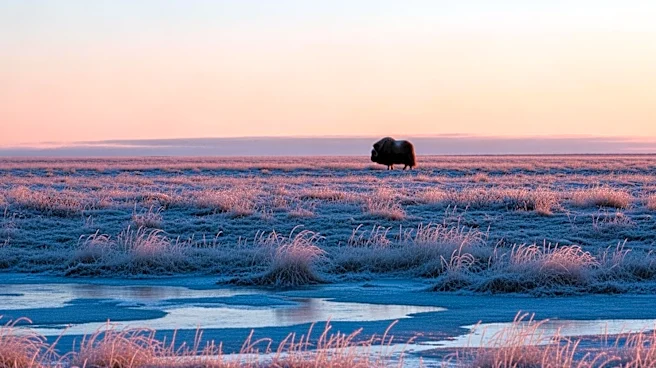
Muskoxen populations in the Canadian Arctic are facing significant threats from emerging diseases and climate change. The Erysipelothrix rhusiopathiae Arctic clone has caused widespread mortalities on Victoria and Banks islands, with populations dropping
dramatically. Additionally, brucellosis, a zoonotic disease, is now appearing in muskoxen, further threatening their survival. These diseases are being tracked through a community-based wildlife health surveillance program involving Inuit hunters, scientists, and government agencies. Muskoxen are crucial for Arctic ecology and Indigenous food security, making their decline a serious concern.
Why It's Important?
The decline of muskoxen populations poses a threat to the food security and cultural practices of Indigenous communities in the Arctic. As a key species in the Arctic ecosystem, their loss could have cascading effects on biodiversity and ecological balance. The situation highlights the broader impacts of climate change and emerging diseases on wildlife, emphasizing the need for integrated conservation strategies that involve local communities and scientific research.
What's Next?
Efforts to monitor and mitigate the impact of diseases on muskoxen will continue, with a focus on expanding the wildlife health surveillance program. Researchers aim to better understand the transmission and origins of these diseases to develop effective management strategies. The findings may also prompt increased collaboration between Indigenous communities and scientific organizations to address the challenges posed by climate change and emerging diseases.
Beyond the Headlines
The situation underscores the importance of traditional knowledge in wildlife conservation, as Indigenous communities play a crucial role in monitoring and managing wildlife health. The integration of traditional practices with scientific research offers a holistic approach to conservation, which could be applied to other regions facing similar challenges.