



What's Happening?
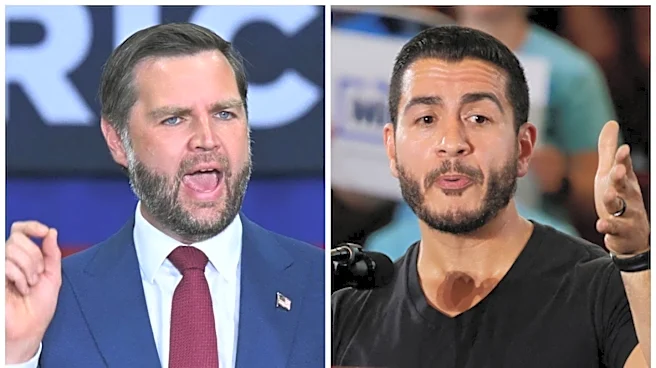
Republican U.S. Senate candidate Mike Rogers and his allies are facing scrutiny for repeatedly claiming that his Democratic opponent, Abdul El-Sayed, has ties to the Muslim Brotherhood. These accusations emerged shortly after El-Sayed was selected as the Democratic nominee
for the U.S. Senate in Michigan. Rogers' campaign, along with the National Republican Senatorial Committee and other conservative groups, has disseminated these claims through statements, campaign materials, and advertisements. They point to a 2011 opinion column by El-Sayed, where he urged U.S. support for Egypt's revolutionary movement and downplayed concerns about the Muslim Brotherhood taking power, as well as his association with Islamic organizations. However, a review by Bridge Michigan found no evidence that El-Sayed has explicit ties to the organization or has ever pledged support to it. Islamic organizations, such as the Council of American Islamic Relations (CAIR-MI), have condemned these attacks as racist, Islamophobic, and harmful to the Muslim community.
Why It's Important?
These claims are significant as they introduce religious and ethnic prejudice into a high-stakes U.S. Senate race, potentially influencing voter perceptions and exacerbating societal divisions. Michigan has one of the largest Arab American populations in the U.S., making such rhetoric particularly impactful within the state. The use of unsubstantiated allegations, especially those linking a candidate to a group that has been designated as a terrorist organization in some contexts, can stigmatize an entire community and undermine the integrity of political discourse. This tactic can also divert attention from substantive policy debates, focusing instead on identity politics and fear-mongering. Furthermore, the attacks highlight a broader trend of Islamophobia in U.S. politics, where a candidate's faith and heritage are weaponized, potentially discouraging diverse representation in government and fostering an environment of distrust among different religious and ethnic groups.
What's Next?
The ongoing U.S. Senate race in Michigan is expected to continue to feature these contentious claims, as Rogers' campaign has shown no signs of retracting them. El-Sayed's campaign will likely continue to counter these accusations by emphasizing his focus on issues that unite Americans, such as addressing medical debt. Civil rights and advocacy organizations like CAIR-MI will likely persist in their efforts to call out what they perceive as Islamophobic attacks and advocate for a more inclusive political environment. The impact of these claims on voter sentiment will be closely watched, particularly given a recent Michigan State University survey indicating that 37% of respondents are less likely to support a Muslim candidate. The outcome of this election could set a precedent for how religious and ethnic identities are discussed and exploited in future political campaigns.
Beyond the Headlines
The deeper implications of these attacks extend beyond the immediate election, touching upon fundamental issues of religious freedom, civil rights, and the nature of political discourse in the U.S. The repeated, unsubstantiated linking of a Muslim candidate to the Muslim Brotherhood, despite a lack of evidence, reflects a pattern of 'collective guilt' often applied to Muslim communities. This can lead to increased harassment and threats of violence against Muslim individuals and organizations, as reported by CAIR-MI. The situation also raises questions about the responsibility of political campaigns and media outlets in verifying information and avoiding the spread of harmful stereotypes. The willingness of some voters to explicitly consider a candidate's religious identity, as indicated by the MSU survey, underscores the persistent challenge of overcoming prejudice in the political arena and the need for mainstream politicians to actively condemn such forms of discrimination.