




What's Happening?
Researchers at Michigan State University (MSU) are conducting a study through the Soil Health Advancement for Agricultural Resilience Enhancement (SHARE) project to analyze how regenerative agricultural practices influence water movement in soil. Alex
Kuhl from the Institute of Water Research explained that the project contrasts different management approaches, such as comparing fields managed with no-till and cover crops for two decades against newly acquired fields implementing these practices. The research focuses on understanding how soil texture, carbon content, and bulk density affect the soil's water-holding capacity. MSU Extension Field Crops Educator Madelyn Celovsky noted that the on-farm soil moisture data, combined with weather conditions and management practices, will be integrated into a decision-support tool for farmers. The SHARE project is funded by the Agricultural Resiliency Program from AgBioResearch and MSU Extension, in partnership with the Michigan Department of Agriculture and Rural Development.
Why It's Important?
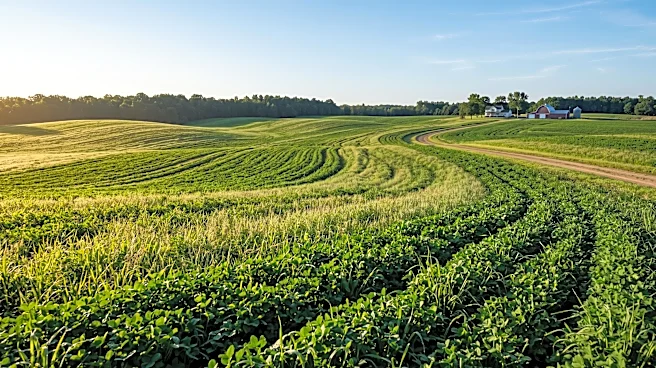
This research is crucial for U.S. agriculture, particularly in regions facing increasing climate variability and water management challenges. Regenerative agriculture practices, such as no-till farming and cover cropping, are gaining traction as methods to improve soil health, enhance water retention, and reduce erosion. By quantifying the benefits of these practices on soil hydrology, the MSU SHARE project can provide farmers with data-driven insights to make informed decisions. Improved soil water management can lead to more resilient cropping systems, reduced irrigation needs, and better water quality, benefiting both agricultural productivity and environmental sustainability. This directly impacts the economic viability of farms and contributes to broader food security and environmental conservation goals across the nation.
What's Next?
The MSU SHARE project will continue to collect and analyze on-farm soil moisture data, integrating it with weather patterns and specific management practices. The ultimate goal is to develop a decision-support tool that can help farmers select the most suitable regenerative agriculture practices for their specific farm conditions. This tool aims to improve soil health and mitigate the impacts of extreme weather events. The findings from this research are expected to be disseminated through MSU Extension, providing valuable information and guidance to a wider farming community. The collaboration with the Michigan Department of Agriculture and Rural Development suggests that the project's outcomes could also inform agricultural policy and incentive programs for adopting regenerative practices.
Beyond the Headlines
The MSU SHARE project delves into the long-term ecological and economic benefits of shifting towards regenerative agriculture, which represents a significant paradigm shift from conventional farming methods. Beyond immediate water management, these practices contribute to carbon sequestration, biodiversity enhancement, and reduced reliance on synthetic inputs, fostering a more sustainable food system. The development of a decision-support tool highlights the increasing role of data science and technology in modern agriculture, enabling precision farming and adaptive management strategies. This research also touches upon the broader societal implications of agricultural practices, including their impact on climate change mitigation and adaptation, and the long-term health of rural communities. The project's success could accelerate the adoption of regenerative agriculture, leading to a more resilient and environmentally friendly agricultural landscape in the U.S.