








What's Happening?
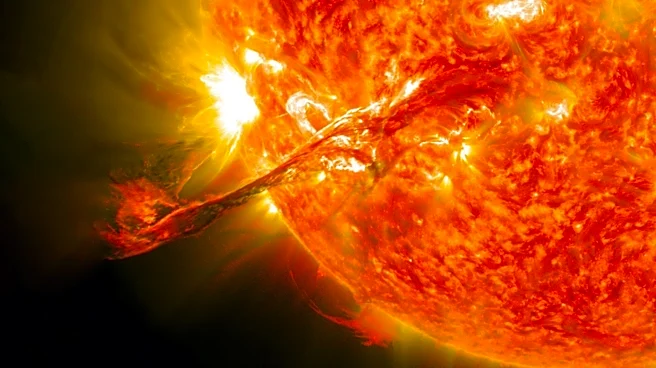
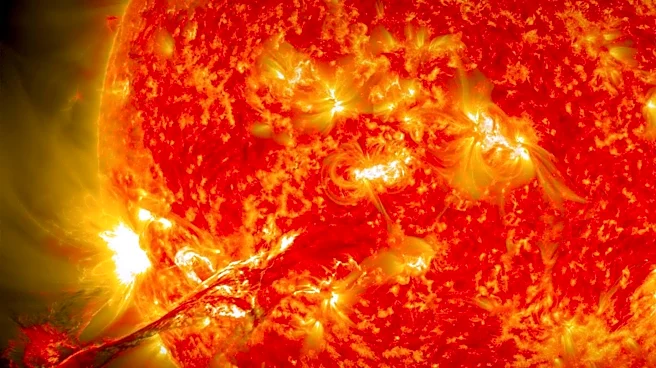
The sun has recently emitted a series of solar flares, including an X1.1 flare on June 30, followed by 10 M-class flares within 24 hours. These solar activities have resulted in multiple coronal mass ejections (CMEs) that are partially directed towards
Earth. Space weather forecasters are predicting heightened geomagnetic activity, which could lead to visible auroras, or northern lights, across parts of the northern United States, including New York and Idaho. The National Oceanic and Atmospheric Administration (NOAA) forecasts moderate geomagnetic storm conditions, potentially pushing the auroras further south than usual. The visibility of these auroras will depend on the interaction of the CMEs with Earth's magnetic field and the orientation of their magnetic fields upon arrival.
Why It's Important?
The potential visibility of the northern lights in more southern regions of the United States is a rare event that could attract significant public interest and tourism, particularly during the July 4 holiday weekend. This phenomenon highlights the impact of solar activity on Earth's geomagnetic environment, which can affect satellite operations, power grids, and communication systems. Understanding and predicting these solar events are crucial for mitigating potential disruptions. Additionally, the increased interest in auroras can boost local economies through tourism and related activities.
What's Next?
As the CMEs approach Earth, space weather agencies will continue to monitor and update forecasts regarding the intensity and timing of geomagnetic storms. Observers and photographers are advised to prepare for potential aurora displays by ensuring their equipment is ready. The scientific community will also analyze the data from these solar events to improve predictive models and understand the sun's behavior better. Public interest in space weather phenomena may lead to increased educational outreach and awareness about the effects of solar activity on Earth.