


What's Happening?
Texas A&M AgriLife Research scientists have achieved promising early results using electron beam (eBeam) technology for the Sterile Insect Technique (SIT) to combat New World screwworm flies. This pest poses a significant threat to Texas's livestock and
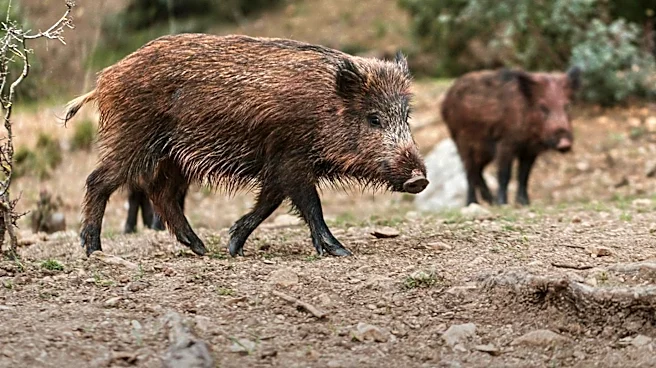
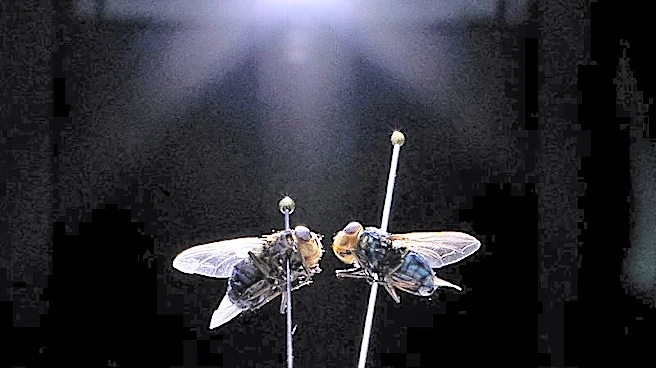
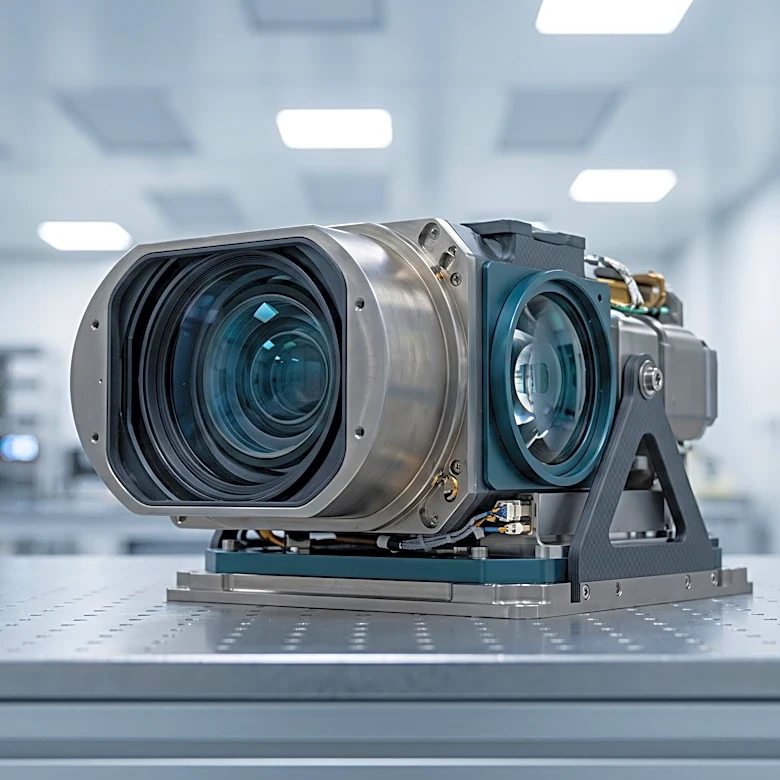
wildlife industries, with potential costs estimated at $2.1 billion for the cattle industry and $9 billion for the hunting and wildlife industry. SIT involves releasing large numbers of sterilized male flies into the wild; since female screwworms mate only once, mating with sterile males prevents eggs from hatching, thus suppressing wild populations. Traditionally, SIT uses radioactive isotopes like cobalt-60 for sterilization. The new eBeam method utilizes commercial electricity, eliminating the safety, security, cost, and logistical burdens associated with radioactive materials. The collaborative research, combining food processing and entomology expertise, has demonstrated that eBeam can effectively sterilize male flies without impairing their physiological functions or ability to mate, and it significantly reduces sterilization time from minutes to seconds.
Why It's Important?
The advancement of eBeam technology for screwworm sterilization is crucial for enhancing the effectiveness and safety of pest control efforts in the U.S. The traditional use of radioactive materials presents considerable challenges, including handling risks, security concerns, and high costs. By transitioning to eBeam, the process becomes faster, safer, and more cost-efficient, making large-scale SIT operations more feasible and sustainable. This innovation is particularly timely given the renewed national attention on New World screwworm outbreaks and the U.S. Department of Agriculture's (USDA) New World screwworm Grand Challenge, which seeks high-impact projects for improved detection, control, and eradication. The potential economic impact of a large outbreak in Texas alone underscores the urgency and importance of developing advanced, reliable control methods to protect vital agricultural and wildlife sectors.
What's Next?
The Texas A&M team plans further rounds of testing to refine the efficiency of eBeam dosing for screwworm pupae. The successful tests position eBeam technology as a strong candidate for the future of SIT efforts, potentially replacing cobalt-60. The USDA has already recognized the significance of this research, allocating $105 million in funding for 40 breakthrough projects, including eBeam research, as part of its Grand Challenge. The National Center for Electron Beam Research at Texas A&M will also assist two companies in developing prototype eBeam platforms for broader SIT applications. This indicates a clear path toward operationalizing the technology for widespread use. Continued collaboration between research institutions and government agencies will be essential to fully integrate eBeam into national screwworm eradication strategies and protect U.S. agriculture and wildlife.
Beyond the Headlines
The successful application of eBeam technology in pest control signifies a broader shift towards more sustainable and safer methods in agriculture and public health. This innovation could set a precedent for managing other insect pests that currently rely on less desirable sterilization techniques. The interdisciplinary nature of this research, combining food processing and entomology, highlights the value of diverse scientific collaboration in solving complex problems. Furthermore, the development reflects a national priority to invest in advanced scientific solutions for biosecurity threats, ensuring the protection of food supply chains and natural resources. The move away from radioactive materials also aligns with global efforts to reduce reliance on hazardous substances, promoting a safer environment for both researchers and the public.