
What's Happening?
Italy's Industry Minister, Adolfo Urso, has called for the suspension of the European Union's Emissions Trading System (ETS) until a revised proposal is presented. The ETS is a mechanism designed to make companies pay for their pollution, aiming to reduce
emissions and encourage investment in sustainable alternatives. Urso argues that the ETS is contributing to competitiveness issues for European businesses, particularly in comparison to China and the United States, due to high power and carbon costs. He suggests that the ETS acts as a tax on energy-intensive companies, hindering their ability to compete. Urso's call for suspension is part of a broader appeal from industry leaders for the EU to address energy and carbon costs urgently.
Why It's Important?
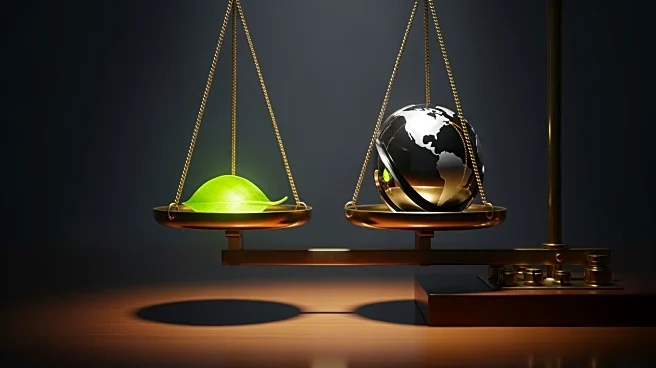
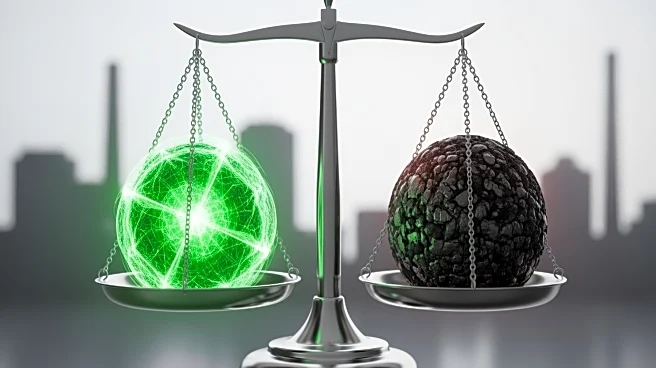
The call to suspend the ETS highlights the tension between environmental policy and economic competitiveness within the EU. The ETS has been a significant tool in reducing emissions, reportedly cutting them by 39% since its inception in 2005. However, the system's impact on business competitiveness, particularly in energy-intensive industries, raises concerns about the balance between environmental goals and economic viability. If the ETS is suspended or reformed, it could affect investments in clean technologies and the broader decarbonization efforts within the EU. The debate underscores the challenges of implementing climate policies that also support economic growth and competitiveness.
What's Next?
The European Commission is expected to review the ETS and present a revised proposal. In the meantime, Italy and other EU member states may continue to push for temporary measures to alleviate the financial burden on businesses. The outcome of these discussions could influence the future of the ETS and the EU's climate strategy. Stakeholders, including industry leaders and environmental groups, will likely engage in lobbying efforts to shape the policy's direction. The EU's ability to balance environmental objectives with economic competitiveness will be closely watched by both European and international observers.