



What's Happening?
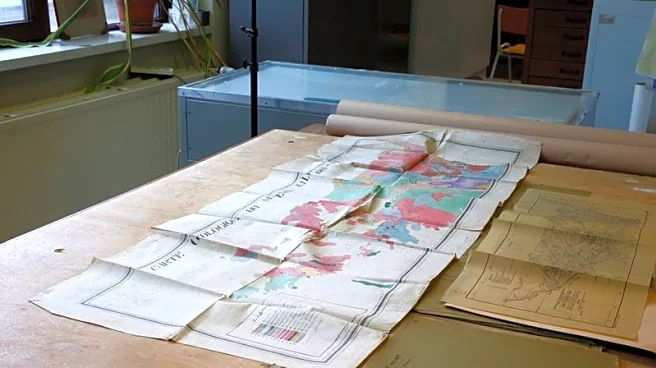
A conflict has arisen between a U.S. mining company, KoBold Metals, and Belgium's Africa Museum regarding the digitization of historical maps from the Democratic Republic of Congo (DRC). KoBold Metals, supported by billionaires Jeff Bezos and Bill Gates,
has proposed to digitize the colonial-era archives to make them publicly accessible, arguing that this would aid investment in mineral exploration in the DRC. However, the Belgian museum, backed by Belgian authorities and the European Union, has declined the offer, citing ethical concerns over allowing private companies to manage public collections. The museum is already engaged in a separate digitization project with the DRC's National Geological Service, expected to take up to five years.
Why It's Important?
This dispute highlights the tension between private enterprise and public institutions over the control and accessibility of historical data. For the DRC, having access to digitized maps could significantly enhance its ability to attract foreign investment in its mineral sector, potentially boosting economic development. However, the museum's stance underscores the importance of maintaining scientific and institutional integrity in managing historical archives. The outcome of this disagreement could set a precedent for how colonial-era archives are handled and shared, impacting future collaborations between private companies and public institutions.
What's Next?
The Belgian museum plans to continue its digitization efforts in collaboration with the DRC's National Geological Service, with data expected to be available in both countries under Belgian and European law. KoBold Metals may need to negotiate further with the DRC government or seek alternative ways to access the data. The resolution of this conflict could influence future policies on the management of colonial-era archives and the role of private companies in such projects.