






What's Happening?
On September 16, Stony Brook University hosted a congressional briefing focused on quantum science, technology, and research workforce development. U.S. Representatives Nick LaLota and Mark Alford sponsored the event, which brought together researchers
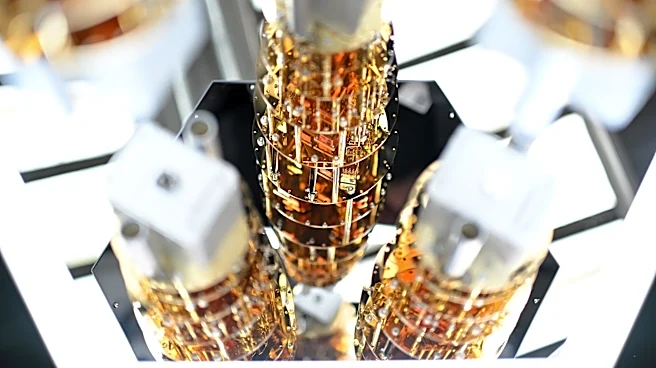
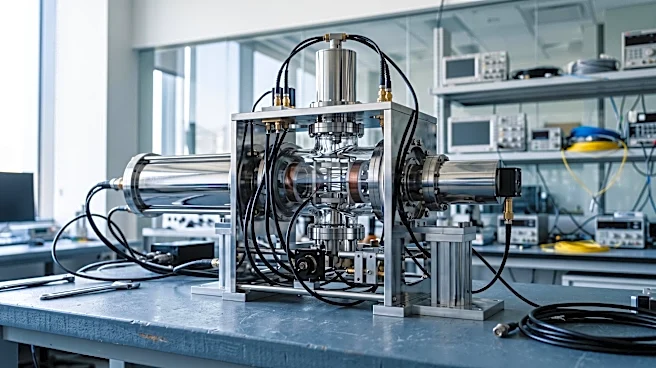
from Stony Brook, Brookhaven National Laboratory, the U.S. Department of Energy, the University of Missouri, and Ohio State University. The briefing highlighted recent quantum innovations, including Qu-MEM, the first commercial room-temperature quantum memory device developed by Qunnect, which enables secure, long-distance quantum information transmission. New York State has also invested $300 million to establish a new Stony Brook Quantum Institute. Representative LaLota announced securing $4.2 million in federal funding for Stony Brook’s Quantum Grid Resilience Initiative. The university is also expanding its quantum education programs, making them accessible across various academic disciplines from undergraduate to doctoral levels, and plans to hire up to 12 new faculty members in quantum research areas.
Why It's Important?
The congressional briefing underscores a significant national effort to advance quantum technology and secure the United States' leadership in this emerging field. Quantum advancements, such as Qu-MEM, promise revolutionary changes in secure communication and computing, offering enhanced protection against cyber threats and enabling faster data processing. Federal funding and state investments signal a concerted push to accelerate research and development, which is crucial for national security and economic competitiveness. Developing a skilled quantum workforce is paramount, as the interdisciplinary nature of quantum science requires specialized expertise. By fostering educational programs and research initiatives, the U.S. aims to cultivate the talent necessary to drive innovation, create new industries, and maintain a strategic advantage in the global technological landscape. This focus on quantum development could lead to significant breakthroughs impacting various sectors, from defense to finance.
What's Next?
Stony Brook University plans to further expand its quantum development initiatives by hiring up to 12 new faculty members across four key quantum research areas: quantum computing and algorithms, quantum communication and networking, quantum devices and sensors, and quantum frontiers. The university also aims to expand its existing Master of Science in Quantum Information Science and Technology program and develop K-12 outreach programs and new learning initiatives with industry partners. The secured federal funding for the Quantum Grid Resilience Initiative will proceed through its final steps, supporting ongoing research. Continued collaboration between academic institutions, national laboratories, and government entities is expected to drive further advancements and workforce development in quantum science, positioning the U.S. for future leadership in this critical technological domain.
Beyond the Headlines
The emphasis on quantum workforce development highlights a broader national strategy to address the growing demand for specialized skills in advanced technological fields. The interdisciplinary approach adopted by Stony Brook University, integrating physics, mathematics, computer science, engineering, and chemistry, reflects the complex nature of quantum technology and the need for diverse expertise. This initiative also points to the critical role of public-private partnerships and government funding in fostering scientific innovation and economic growth. The long-term implications include not only technological superiority but also potential shifts in global power dynamics, as quantum capabilities could redefine national security, economic infrastructure, and scientific discovery. Ethical considerations surrounding quantum computing's potential impact on cryptography and data privacy will also become increasingly relevant as the technology matures.