






What's Happening?
The Food and Agriculture Organization (FAO) has reported an increase in global food commodity prices for March 2026, marking the second consecutive month of rising prices. The FAO Food Price Index averaged 128.5 points, a 2.4% increase from February and 1.0%
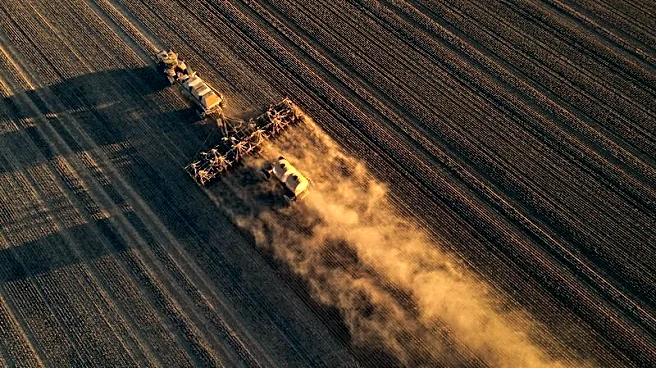
higher than the previous year. This rise is largely attributed to higher energy prices due to ongoing conflict in the Near East, which has impacted agricultural input costs and market sentiment. The FAO Cereal Price Index saw a 1.5% increase, driven by a 4.3% rise in world wheat prices, influenced by drought conditions in the U.S. and reduced plantings in Australia. Other commodity groups, such as vegetable oils and sugar, also experienced price hikes due to increased crude oil prices and biofuel demand expectations.
Why It's Important?
The increase in global food prices has significant implications for both producers and consumers. Higher energy and fertilizer costs are creating uncertainty in global markets, potentially affecting future food supply and commodity prices. Farmers may face difficult decisions regarding input use and crop choices, which could impact yields and food availability. The situation is further complicated by the closure of the Strait of Hormuz, which has disrupted global trade and increased transportation costs. These developments could lead to higher food prices for consumers and financial strain on agricultural producers, particularly in regions heavily reliant on imports.
What's Next?
If the conflict in the Near East continues, it could exacerbate the current challenges in the global food supply chain. Farmers may need to adapt by reducing input use or shifting to less fertilizer-intensive crops, potentially affecting future yields. The FAO has forecasted a decline in global wheat output for 2026, which could further strain supply. Additionally, the ongoing disruptions in the Strait of Hormuz may continue to impact global trade and transportation costs, influencing food prices and availability worldwide.
Beyond the Headlines
The rising food prices highlight the interconnectedness of global markets and the vulnerability of food systems to geopolitical events. The situation underscores the need for resilient agricultural practices and diversified supply chains to mitigate the impact of such disruptions. It also raises ethical considerations regarding food security and the equitable distribution of resources, particularly in developing regions that may be disproportionately affected by price increases.