







What's Happening?
Andrew Mountbatten-Windsor, formerly Prince Andrew, has been served with a witness summons to testify in a fraud trial next month. This marks the first time a British royal has received such a summons in 200 years. The case involves allegations by Turkish
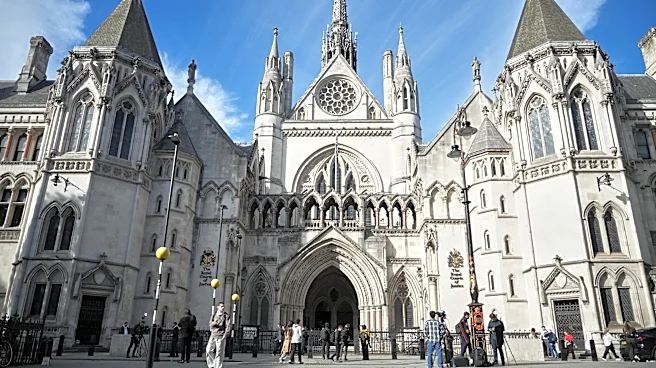
national Nebahat Isbilen that her former advisor, Selman Turk, misled her regarding a payment of nearly $1 million made to Mountbatten-Windsor in 2019. Isbilen believed the payment was to help her obtain a new Turkish passport, a claim Turk allegedly knew to be false. While Mountbatten-Windsor is not accused of any wrongdoing, a judge ruled that he can be asked to provide evidence. He is expected to testify around December 15. This public questioning will be his first since his 2019 Newsnight interview, which led to his stepping down from royal duties. Separately, Mountbatten-Windsor has reportedly launched a legal challenge against his arrest in connection with an ongoing investigation into his relationship with Jeffrey Epstein, though search warrants in that case were recently deemed unlawful.
Why It's Important?
This development is significant as it places a member of the British royal family under public scrutiny in a legal setting, an event rare in modern history. While Mountbatten-Windsor is not a defendant, his testimony could shed light on his financial dealings and the circumstances surrounding the payment, potentially impacting public perception of the royal family. The case highlights the complexities and potential pitfalls of financial transactions involving high-profile individuals, even when no direct wrongdoing is alleged against them. For the British monarchy, this trial could reignite discussions about transparency and accountability, especially given Mountbatten-Windsor's previous controversies. The involvement of a Turkish national and allegations of passport assistance also touch upon international relations and the potential for influence peddling, adding another layer of importance to the proceedings.
What's Next?
Mountbatten-Windsor is expected to provide evidence in the High Court trial around December 15. His legal team may attempt to challenge the summons, though a judge has already ruled that he can be called to testify. His appearance will likely involve probing questions about his financial affairs and the payment in question. This public testimony will be closely watched, as it will be his first public questioning since his 2019 Newsnight interview. The outcome of his testimony could influence public opinion and potentially lead to further scrutiny of his past associations and financial arrangements. Separately, the ongoing investigation into his relationship with Jeffrey Epstein, despite the recent ruling on search warrants, suggests that legal challenges and public interest in his activities will continue.
Beyond the Headlines
The summons to testify in a fraud trial, coupled with the ongoing legal challenges related to the Epstein investigation, underscores a period of intense legal and public scrutiny for Andrew Mountbatten-Windsor. This situation raises broader questions about the conduct and accountability of individuals associated with royal families, particularly concerning financial dealings and personal associations. The case also highlights the increasing difficulty for public figures to maintain privacy in an era of heightened media attention and legal transparency. The 'uncomfortable prospect' of his testimony, as described by legal experts, suggests that even without direct accusations of wrongdoing, the process itself can be damaging to reputation and public standing. This event could set a precedent for how legal systems interact with and scrutinize members of prominent families, potentially influencing future expectations of transparency.