


What's Happening?
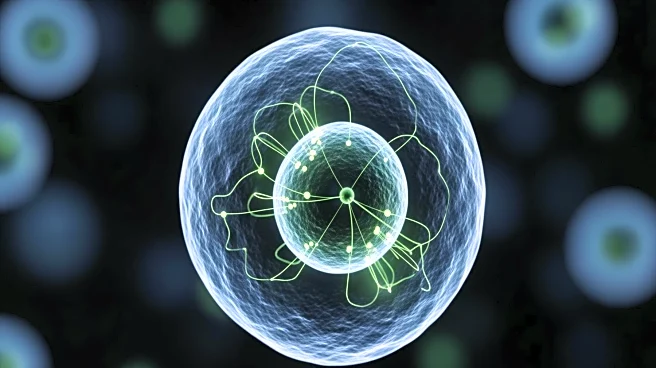
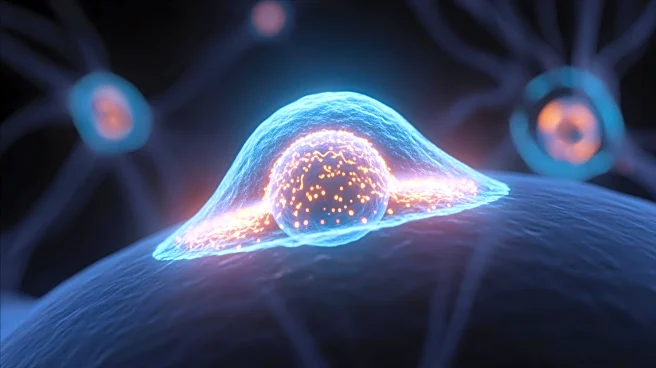
Researchers have discovered that Stentor coeruleus, a unicellular organism, is capable of associative learning, a complex form of learning previously thought to require a brain. This organism, which lives in ponds, can predict that one stimulus will follow
another, similar to Pavlov's classical conditioning experiments with dogs. The study, conducted by Sam Gershman and colleagues at Harvard University, involved conditioning Stentor to associate a weak tap with a subsequent strong tap, leading to a learned response. This finding challenges the understanding of cognitive abilities in simple organisms and suggests that associative learning may have ancient evolutionary origins.
Why It's Important?
The discovery that a single-celled organism can perform associative learning tasks challenges existing theories about the cognitive capabilities of simple life forms. It suggests that the mechanisms for learning and memory may have evolved much earlier than previously thought, potentially influencing the development of multicellular nervous systems. This research could lead to new insights into the fundamental processes of learning and memory, with implications for understanding the evolution of intelligence. It also raises questions about the cognitive abilities of other simple organisms and their potential applications in scientific research.
Beyond the Headlines
The study of Stentor coeruleus may prompt a reevaluation of the cognitive potential of other unicellular organisms. Understanding how these organisms process information could inform the development of bio-inspired computing systems and artificial intelligence. Additionally, the research highlights the complexity and adaptability of life, even at its most basic levels, and may inspire further exploration into the origins of cognitive functions in living organisms.